Ultralight Headlamps Explained: Finding the Sweet Spot of Weight and Power

In the world of outdoor gear, counting grams is not just an attitude—it is a science. When we talk about weight reduction for alpine climbing, long-distance trail running (FKT attempts), or multi-day fastpacking, every gram deserves scrutiny.
In these weight-critical activities, the headlamp often occupies an awkward position: it is the absolute core of nighttime safety, yet also an unavoidable load on your forehead.
Thus, we chase “ultralight.” But have you ever wondered: when a headlamp’s weight drops from 150 g to 80 g, then to 40 g, what price are we really paying? Higher cost? Weaker brightness? Shorter runtime?
Today, we move beyond empty slogans. We dive into what lies behind the grams and search for that personal “sweet spot” where performance and weight are perfectly balanced.
Why Do Grams Matter So Much? It’s Not Just About Your Neck

First, let’s set the record straight: pursuing an ultralight headlamp is not nitpicking.
In long-distance, high-intensity activities, extra weight drains you in two ways:
- Direct physical load: Every extra gram requires your muscles to work harder over thousands of strides. In ultramarathons or multi-day hikes, tens of grams on your forehead accumulate into neck fatigue and hidden energy loss.
- Psychological and decision-making load: A bulky, noticeable headlamp makes you subconsciously avoid wearing or turning it on. A barely-there headlamp encourages constant readiness, which is itself a safety upgrade.
The ultimate goal of lightweight design is to minimize presence while maximizing functional efficiency.
Deconstructing the “Cost” of Lightweight Design: Where Do the Grams Go?
When engineers try to reduce headlamp weight, they usually cut from these areas—each with potential compromises:
1. Battery: The Energy Density Trade-Off
This is the biggest source of weight reduction. Replacing bulky AA battery compartments with integrated rechargeable lithium batteries can save dozens of grams.
The cost: you must plan charging, and in remote areas you may face energy scarcity. Lighter batteries usually mean smaller capacity (mAh), directly translating into shorter runtime. Ultralight headlamps must be evaluated at equal brightness levels, not marketing claims.
2. Structure and Materials: The Limits of Durability
Thinner housings, narrower headbands, and smaller optics save weight—but may reduce impact resistance and stability. Advanced engineering plastics (such as ABS) offer a better strength-to-weight balance. Metal parts, while strong, rarely win on weight.
3. Features and Heat Dissipation: Simplicity Equals Lightness
Every added feature—advanced dimming circuits, colored LEDs, motion sensors—adds weight and power draw. Extreme lightweight designs favor one strong core function over all-in-one versatility.
High-output LEDs require heat dissipation, and heat sinks add mass. As a result, ultra-light headlamps often cap maximum brightness due to thermal limits.
Defining the Battlefield: The “Mission” of Each Weight Class
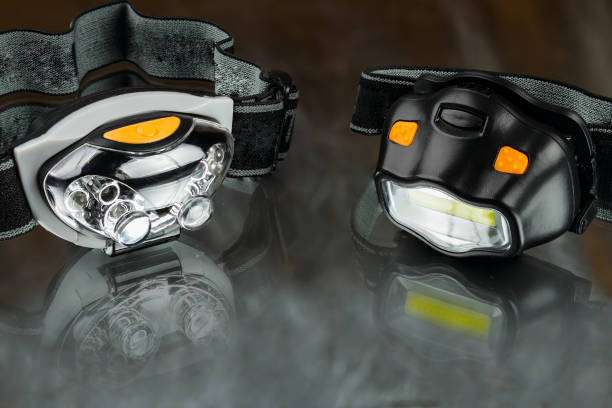
Tier One: Extreme Ultralight (< 50 g)
Typical mission: Emergency backup, very short night use, or as the sole headlamp for extreme gram-minimalists.
What to expect: Very limited brightness (usually 100–200 lumens), basic flood lighting, short runtime (2–5 hours at medium output), extremely simple construction.
Sweet spot: For those with minimal night travel who are willing to recharge frequently.
Tier Two: Performance Lightweight (50–100 g)
Typical mission: Trail running, fast hiking, alpine-style climbing—the primary headlamp for serious lightweight athletes.
What to expect: This is the true sweet spot. Brightness of 200–400 lumens, balanced flood/spot beams, 6–10 hours of mid-level runtime, and practical features like USB charging and splash resistance.
Sweet spot: For most runners and fastpackers, this range offers the best performance-to-weight ratio with no painful compromises.
Tier Three: Full-Featured Heavyweight (> 100 g)
Typical mission: Multi-day trekking, camping, search and rescue, caving.
What to expect: maximum brightness (500+ lumens), extended runtime via large or external batteries, the most rugged construction, and the richest feature set.
Sweet spot: When absolute reliability, runtime, and versatility outweigh concerns about grams.
Case Study: When 91 Grams Becomes a Runner’s Sweet Spot
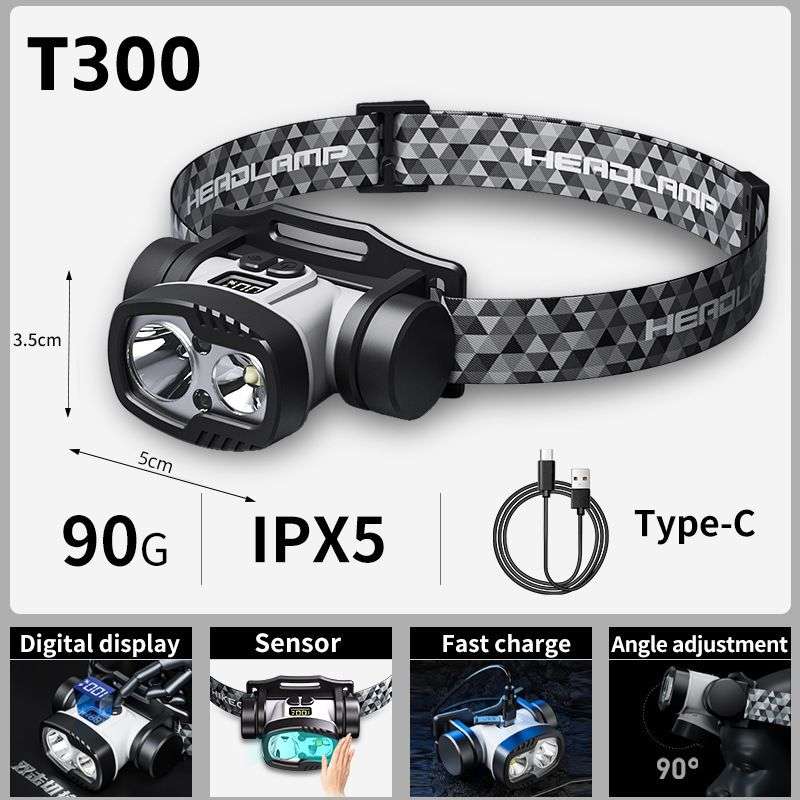
Consider an ultralight headlamp designed specifically for runners, weighing 91 grams—squarely in the performance lightweight tier.
For runners, weight is critical, but stability and beam quality are non-negotiable. A 40 g lamp may bounce violently at speed, causing erratic light and even dizziness. At 91 g, combined with an anti-bounce ergonomic headband, the beam stays locked on the trail.
Its wide-beam LED prioritizes near-field and peripheral flood lighting—exactly what runners need—rather than chasing long-distance throw. This is a smart performance allocation within a lightweight framework.
A 10-hour runtime provides a comfortable safety margin for ultramarathons or consecutive night training sessions, without the weight penalty of oversized batteries.
This 91 g represents the optimal intersection of stability, beam usefulness, runtime confidence, and weight discipline.
Finding Your Own Sweet Spot: A Key Question Checklist
- What is my primary activity? (Trail running / Fastpacking / Long-distance trekking / Camp-focused)
- What is my longest expected continuous use? (< 3 hours / 3–8 hours / All night)
- Which features matter most? (Rank: weight / max brightness / flood quality / runtime / comfort / price)
- How much performance compromise or price premium am I willing to accept per 10 g saved?
Your answers will point clearly to the right weight range. For runners and fast hikers, 50–100 g is often ideal; for extremes or full-feature needs, the answer lies at either end.
Lightweight Myths and Answers
|
Question |
Answer |
|
Does lighter always mean less durable? |
Not necessarily. Excellent lightweight design relies on smart materials and structural optimization, not just thinning. A well-engineered 90 g headlamp can outlast a poorly designed 150 g one. Long-term user reviews are key. |
|
What if an integrated battery dies on a long trip? |
Risk management is essential:
|

Finding the ultralight headlamp sweet spot is ultimately a candid dialogue with yourself—about how you define “enough.”
This lamp may not be the heaviest item in your pack, but when darkness falls, it becomes your entire world of light. Every gram must serve a clear purpose.
Don’t get lost in the numbers game of weight, and don’t be dragged down by redundant features. Find the balance point where the lamp nearly disappears—yet delivers clear, stable, reliable light the moment you need it.
That is your personal sweet spot between lightness and power. Discover ultralight headlamps that balance low weight, stable beam performance, and reliable runtime for fast-paced adventures.