Winter Camping Survival: Choosing a Headlamp That Works in Extreme Cold

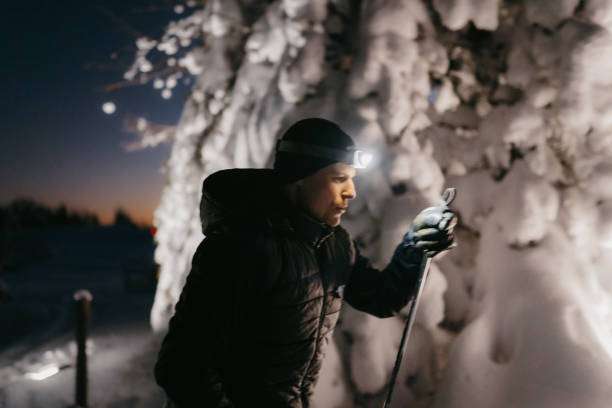
The primary enemy of winter outdoor lighting is not darkness but the cold itself, which devastates batteries.
Both rechargeable lithium-ion and standard alkaline batteries experience drastically slowed chemical reactions at low temperatures.
This leads to two frustrating consequences:
- Instant power loss: You may step out of a warm tent or vehicle with a full battery, only for your headlamp to dim or shut off within 30 minutes in -10°C wind. This is not a malfunction but a temporary voltage drop due to low temperature. Returning to warmth may partially restore power—but such unpredictability is deadly in the wild.
- Halved actual capacity: Even during discharge, low temperatures can reduce usable battery capacity to 50% or less. A headlamp planned for 6 hours may fail after just 3.
Countermeasure: Always carry backup power and keep it close to your body. Store spare batteries or power banks in inner pockets to preserve warmth. Preheat your active headlamp in your jacket for a few minutes before heading out. Prioritize models with proven cold-weather performance or realistic runtime data. Plan for “winter halving” of advertised capacity.
Communicating With Your Headlamp While Wearing Thick Gloves
Winter camping means gloves are almost always worn—light fleece for camp tasks and heavy waterproof insulated gloves for movement or harsh conditions.
Operating tiny buttons becomes frustrating: poke clumsily through gloves, or remove them and risk frostbite.
Countermeasures: Smart functions shine here:
- Large physical buttons: Oversized switches allow glove operation—simple but effective.
- Sensor switches—the winter lifesaver: Gesture-controlled lamps allow switching without fine finger use. Imagine setting up a tent in a blizzard with snow-covered gloves—one wave, the light appears; another, it disappears. This touchless interaction preserves warmth and dryness, enhancing safety in freezing conditions.
Winter-Specific Tasks: How Your Headlamp Responds
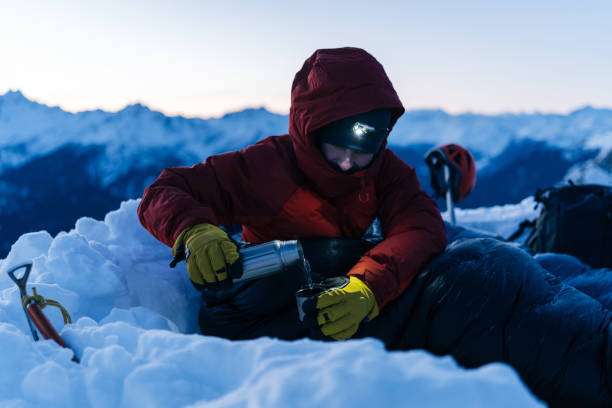
Snow Melting for Water
A slow, delicate process at the stove. Stable, even lighting is necessary to observe melting progress, not harsh spotlights. Flood mode and adjustable angles are critical to softly illuminate the cooking area.
Building Snow Shelters or Reinforcing Tents
Sudden night storms may require venturing out. Headlamps must provide sufficient brightness and wide-angle coverage to see the work area and falling snow. Waterproof and dustproof ratings are essential.
Night Navigation and Hazard Detection
Snow obscures terrain features like cracks and slopes. Spot mode with good reach helps determine safe routes. Even light distribution is critical to avoid glare from snow reflection.
Choosing Your Winter “Armor of Light”: Key Criteria
- Excellent low-temperature performance: either inherently cold-resistant batteries or strict body-warming strategies.
- Glove-friendly operation: Sensor switch preferred, large physical button acceptable. Tiny multi-function buttons are impractical.
- Long runtime: Account for cold-induced power loss. A single charge or battery set should last 6–8 hours with an extra margin.
- Lightweight and wearable: Comfortable over hats or helmets, with adjustable headbands for extra clothing layers.
- Reliable protection: Minimum IPX4 waterproofing to handle melting snow and snowfall.
A Smart Lighting Companion Built for Winter
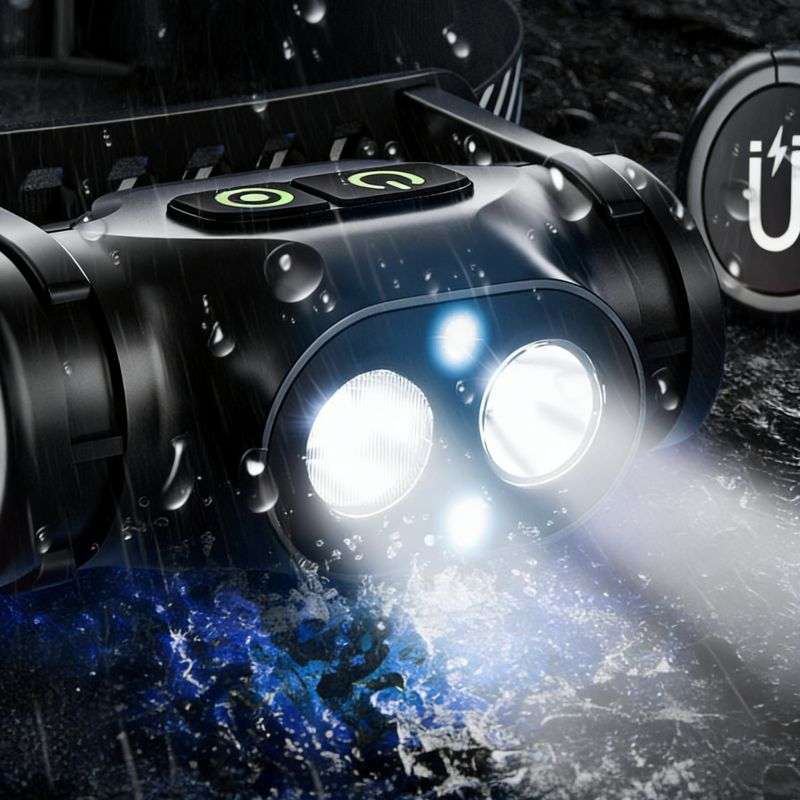
Meeting these demands, a thoughtfully designed outdoor headlamp becomes a reliable guide through winter darkness.
A model integrating sensor switches and long runtime aligns perfectly with winter needs.
- Sensor function solves the core problem of “gloved operation.” Gestures control light without exposing hands or searching for buttons.
- A 15-hour rated runtime (with reasonable insulation) offsets winter battery shrinkage, providing confidence for prolonged tasks like melting snow or cooking. Lightweight (≈60 g) ensures long-term comfort over thick hats.
- Waterproof housing and adjustable brightness allow reliable operation in blizzard conditions and flexible light for fine reading or wide-area observation.
This headlamp acts as a silent sentinel, bridging you and the frigid darkness with a warm, clear light barrier.
Winter Lighting Practical Q&A
|
Question |
Answer |
|
What if my headlamp dies in the cold, and spare batteries are frozen in my pack? | Stop and find shelter from the wind. Place the dead or frozen battery/headlamp close to your core (armpit, abdomen) for 10–15 minutes. Slight warming usually restores partial voltage, providing crucial short-term lighting to return to safety. This highlights the importance of keeping backup power close to your body. |
|
Are there headlamps or batteries designed for extreme cold? |
A few niche professional products have insulated battery sleeves or low-power self-heating systems but are rare and expensive. For most users:
|
Winter camping tests both gear and mindset.
Your headlamp is more than illumination—it liberates your hands, creates a controllable warm boundary against the cold, and is a source of safety and confidence.
When you wave your hand to summon steady, intelligent light in howling winds, illuminating your path and tasks, you understand that true preparedness lies in attention to detail and selecting quality gear.
Let this light accompany every breath in winter, illuminating the crystal-clear nights of the brave and wise.