Don’t Let Your Headlamp Ruin Camp: 3 Common Setup Mistakes to Avoid

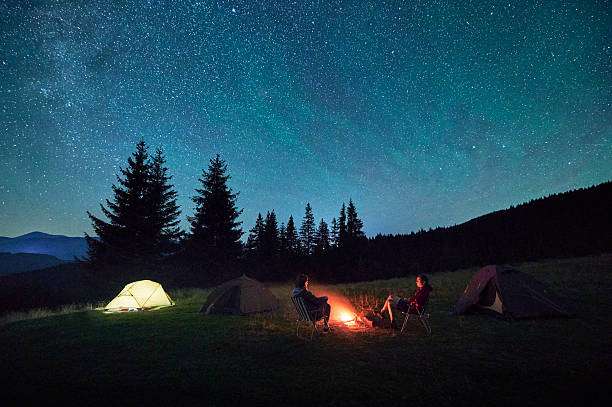
Do you remember that camping trip when the headlamp in the tent across from you was as bright as a searchlight?
Or have you experienced this: while cooking at camp, your headlamp beam didn’t illuminate the cutting board but instead shot straight into the sky, attracting countless insects in a “suicidal swarm”?
Or perhaps, after a long hike, just as you were ready to rest, your headlamp mysteriously ran out of power, leaving you fumbling awkwardly in the dark?
If you’ve ever silently complained about these situations—or worse, you were the one unintentionally causing them—then this article is written for you.
A well-designed headlamp is an outdoor miracle tool. But a poorly configured one is more than enough to ruin both your own experience and that of everyone around you. The good news is that these problems usually have nothing to do with how good your gear is but instead come from a few easily overlooked usage habits.
Today, we’ll break down three of the most common headlamp setup mistakes and show you how to fix them easily—helping you upgrade from a “source of light pollution” to a “good neighbor at camp.”
Mistake #1: Running in “Turbo Mode” All the Time—A Dual Disaster for Battery and Social Etiquette
The Scenario
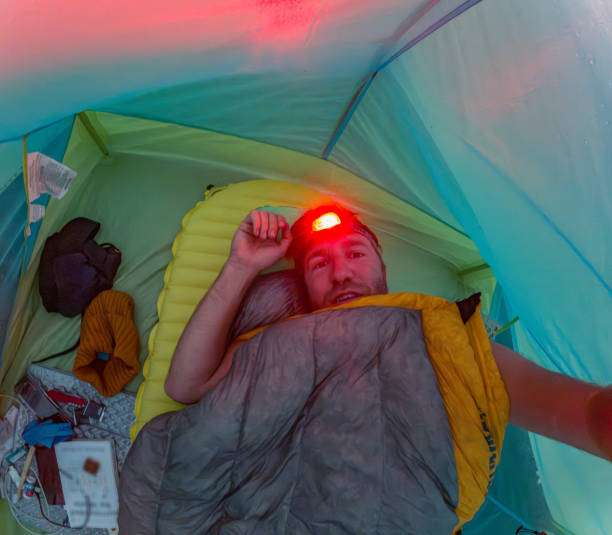
You paid a premium for a high-lumen headlamp and thought, “If I bought it, I might as well use the brightest mode.” So from pitching your tent to brewing coffee, from night walks to bathroom breaks, you keep it on maximum output. That blinding white beam makes you feel like a lighthouse in the dark.
Why This Is Wrong
- Battery killer: Maximum brightness is a battery vampire. It drains power at an astonishing speed, potentially leaving you in the dark when you really need light—such as during a midnight emergency or early-morning pack-up. For most outdoor activities, 90% of the time you simply don’t need that level of brightness.
- Creator of light pollution: In shared campsites, your powerful beam invades other tents mercilessly, destroying the atmosphere of a peaceful starry night or restful sleep. This is a lack of outdoor etiquette.
- Self-inflicted harm: Continuous exposure to strong light severely damages your dark adaptation. Once you turn it off, your eyes need much longer to readjust, which can be a safety hazard.
- Insect magnet: Flying insects are irresistibly drawn to certain wavelengths of white light. You are essentially hosting an open invitation to a “bug party.”
How to Fix It: Practice the “On-Demand Lighting” Principle
Think of your headlamp like a car engine: low gear in the city, full throttle only on the highway.
- Inside the tent (organizing your sleeping bag, reading): use the lowest brightness setting (usually 30–50 lumens is more than enough) or red light mode.
- Camp cooking and gear organization: use a medium-brightness flood beam, keeping the light focused on your immediate work area.
- Night hiking or route finding: only briefly switch to high-brightness spot mode when you need to see further ahead—then turn it back down.
Develop the habit of adjusting brightness according to the task. Your battery life will multiply, and your relationship with the campsite environment will become far more harmonious.
Mistake #2: “Stargazing” Beam Angle—Lighting Up Moths, Not Your Feet
The Scenario
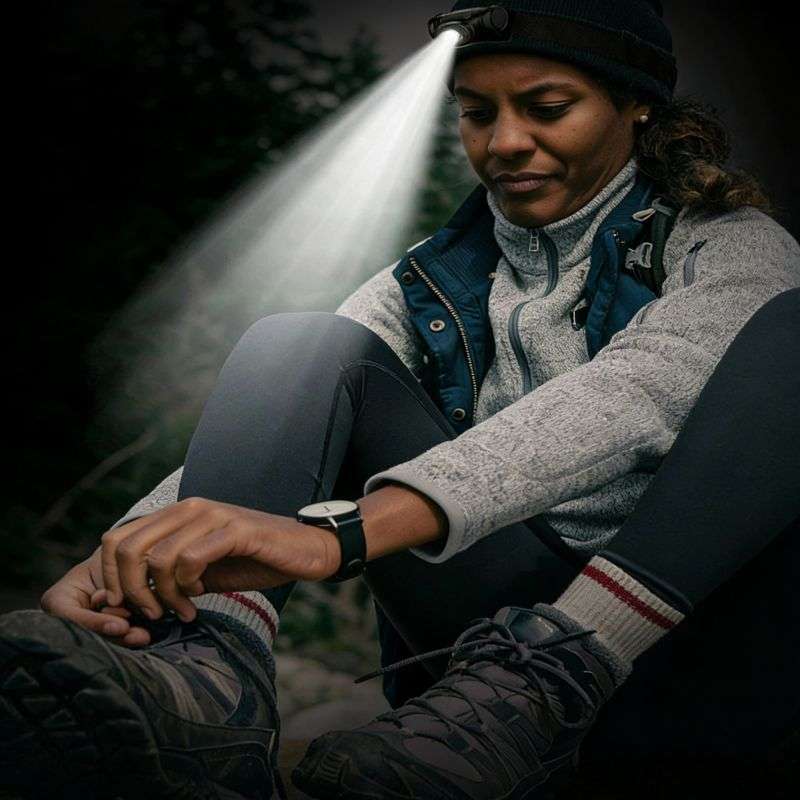
Your headband is too loose, or you habitually tilt the lamp too high. The beam shoots straight out like a flashlight or even slightly upward. You feel like you’re lighting up the distance, but the ground beneath your feet is blurry, forcing you to move cautiously.
Why This Is Wrong
- Safety hazard: This is one of the leading causes of tripping and missteps. The light isn’t illuminating the area you’re about to step on (the ground 1–3 meters ahead), preventing you from seeing roots, rocks, or holes in time.
- Disturbing others: A horizontal beam sweeps directly into the eyes of oncoming companions or other campers, causing momentary blindness. This is both rude and dangerous.
- Low efficiency: Most of the light energy is wasted illuminating useless air and treetops instead of your actual work area.
How to Fix It: Master the “Chin Shadow” Golden Rule
- Put on and turn on your headlamp, standing on flat ground.
- Naturally lower your head and look toward your chest and the ground in front of your feet.
- Adjust the lamp angle until the center hotspot lands steadily about 1.5 to 2.5 meters (5–8 feet) in front of you.
Now observe: does your chin cast a heavy, moving shadow on your chest? If yes, the angle is still too high and needs further downward adjustment.
The ideal state is when the beam cleanly covers the ground ahead in a fan-shaped area, with no body parts casting distracting shadows.
The correct angle maximizes lighting efficiency while simultaneously improving safety and courtesy.
Mistake #3: Skipping the “Mode & Battery Check” Before Use—Unpleasant Surprises in the Dark
The Scenario
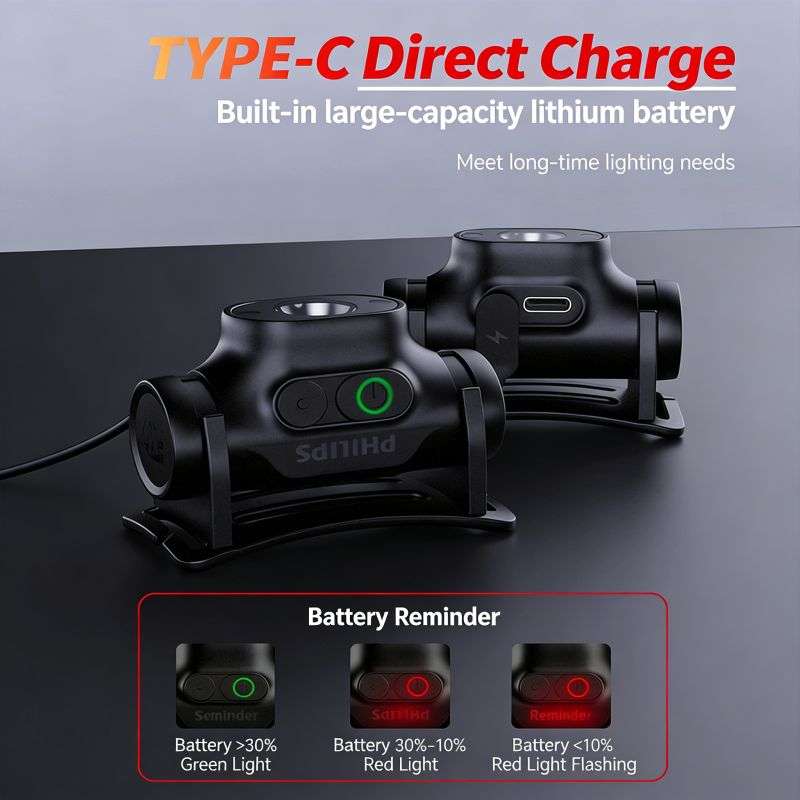
After a full day of hiking, night falls. You pull your headlamp from deep in your pack and confidently press the button—only to see a dim red glow or a brief flicker before it dies. You realize it was left in red mode, or the battery quietly drained after the last use.
Why This Is Wrong
At moments when light is urgently needed, such surprises cause unnecessary panic, delays, and risk. You may end up fumbling for spare batteries in the dark or holding up the entire group.
How to Fix It: Build a “Pre-Departure Double-Check” Ritual
Make this habit as automatic as tying your shoelaces. Before any post-sunset activity:
- Check battery: If there’s a battery indicator, check it. If not, estimate based on last use. On multi-day trips, top it up with a power bank each morning or midday.
- Check mode: Confirm the current mode and switch it to the one you’re most likely to need first—usually medium-brightness flood. One press, and you’re ready.
- (Bonus check) Clean the lens: Wipe the glass or plastic lens with your clothing. Dust and grime significantly reduce light output.
This simple 10-second ritual can save you a tremendous amount of trouble.
Make a Good Tool Truly Work for You
Avoiding these mistakes can make any headlamp feel smarter and more capable. Of course, when the gear itself is designed to guide correct usage, that’s even better.
A user-friendly headlamp integrates mistake-proof thinking into its design: clear, non-accidental mode switching and intuitive battery indicators that make pre-departure checks effortless.
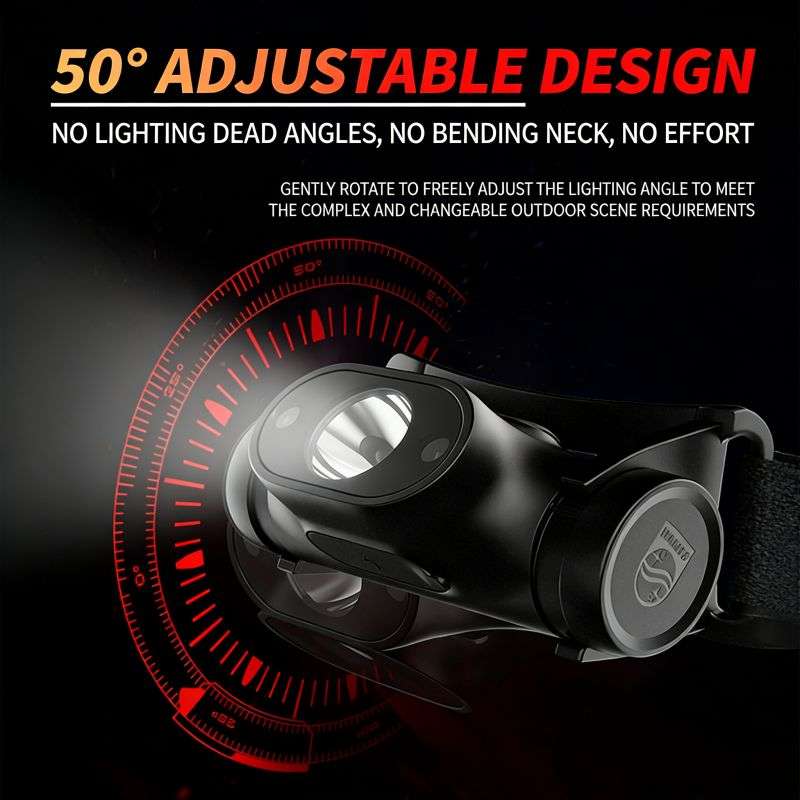
Secure, easily adjustable headbands and angle locks physically prevent the lamp from gradually drifting into “stargazing mode” during activity.
And sufficient, reliable runtime gives you the confidence to practice on-demand lighting—so you don’t have to sacrifice necessary, safe illumination just to save every last bit of power.
When you know your light can last the entire night, you naturally become a more considerate outdoor partner.
Discover Headlamps Designed for Polite, Efficient Camp Lighting
Common Camp Lighting Questions Answered
|
Question |
Answer |
|
Is it better to wear a headlamp on a hat or directly on your head? | It depends on your activity and your hat. On a hat brim: moves the light slightly farther from your eyes, reducing glare from glasses or eyelashes, and encourages a naturally downward beam. A wide brim also blocks upward spill, reducing light pollution and insect attraction. Directly on the head: usually more stable, especially during intense movement. Light fully follows head motion. Recommendation: Try both. Use the brim method in camp and direct-on-head when walking or performing tasks requiring stable lighting. |
|
How should I properly clean and maintain a headlamp, especially the headband? | Lamp body: wipe with a soft damp cloth; for stubborn dirt, use mild soapy water. Never submerge unless rated for underwater use. Headband: usually removable. Hand-wash with cold or lukewarm water and neutral soap. Rinse thoroughly. Do not use fabric softener or bleach. Air-dry in the shade—avoid dryers and direct sunlight. Battery contacts: For replaceable batteries, occasionally clean contacts with a dry cotton swab or eraser to prevent oxidation. |
Becoming a headlamp expert doesn’t require the most expensive or complex model—it begins with respect for a beam of light.
Respect its energy, respect its direction, and respect the shared space between darkness and others.
Tonight, when you put on your headlamp again, take one minute: lower the brightness, fine-tune the angle, and confirm its status.
This small act will not only illuminate a safer path under your feet but also create a more comfortable, peaceful, and beautiful outdoor night for everyone.
From tonight on, let the light on your forehead learn the art of elegance.