Silent Hunter: How to Choose a Night Fishing Headlamp That Won’t Spook Fish

The waterside at night is a completely different world. The daytime clamor fades, leaving only the whisper of waves, the hum of insects, and the taut anticipation of something breaking the surface.
For true anglers, night fishing is not a secondary option but a more meditative ritual often yielding greater rewards. Yet, this pursuit of tranquility can be easily shattered by a seemingly innocuous element—a wrong choice of light.
You may have experienced this: finally seeing a float twitch in silence, you shine a bright light onto the water, scattering the fish instantly, leaving only ripples of frustration. Or, while baiting a hook, you awkwardly hold a flashlight, getting sticky bait everywhere.
The success and joy of night fishing often hinge on the lamp above your brow. Today, let’s discuss how to select a headlamp truly designed for anglers, turning it from a potential “fish-scaring device” into your silent, efficient “collaborator.”
The Three Core Philosophies of Night Fishing Lighting
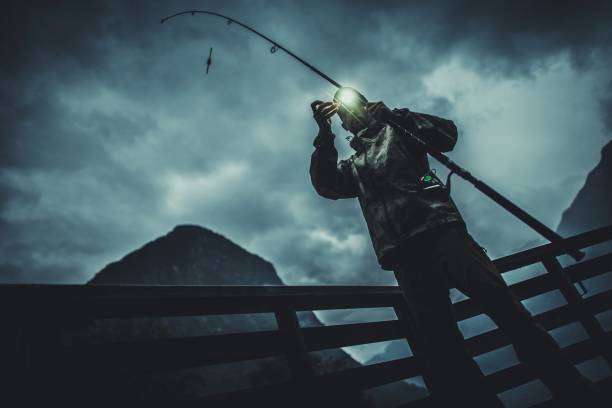
Before discussing specific functions, we must understand the unique requirements of light for night fishing. It is far more than simply “illuminating.”
Philosophy 1: Invisible to Fish, Visible to You
Many fish are sensitive to light, especially short-wavelength blue-white light. A sudden beam into the water acts as an invasion alarm. Therefore, the primary principle is minimal intrusion.
You need enough light to see your rod, reel, tackle box, and the ground, but avoid directly shining on water or spilling into the surroundings. The light should be controllable, directional, and preferably of a color less disturbing to fish.
Philosophy 2: Absolute Hands-Free Operation
Fishing involves delicate operations: rigging tackle, baiting hooks, unhooking fish, and adjusting floats. Holding a light makes these tasks clumsy and inefficient. Worse, when handling a catch, mucus-covered hands make touching equipment unpleasant.
Hands-free is not convenience—it is essential. The light must be securely worn on the head, following your gaze, fully freeing your hands.
Philosophy 3: Lasting Patience
Night fishing is a battle with time and patience, often lasting hours until dawn. Your lighting system must have reliable runtime to last all night without dying at a critical moment. Frequent battery changes or low-power anxiety disrupt immersion in the fishing flow state.
Headlamp Functions Aligned with Night Fishing Scenarios
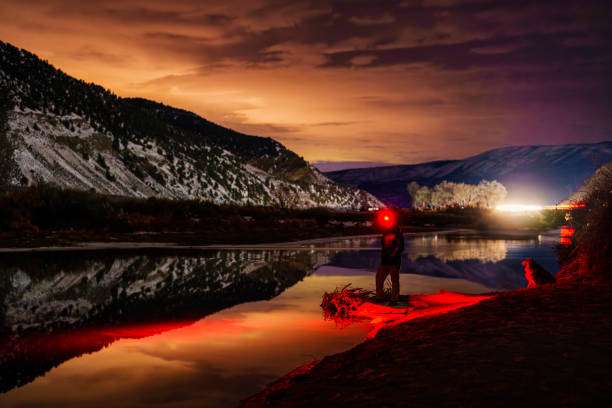
1. Red Light Mode: Your First “Optical Camouflage”
Red light is the ace of night fishing illumination. Scientifically:
- For you: Rod cells in the retina responsible for night vision are insensitive to red light. Pupils do not contract as with white light, protecting night vision. Once the red light is off, you adapt to darkness within seconds.
- For fish: Red light penetrates water less, and most fish visual systems are insensitive, greatly reducing the chance of spooking them.
- Bonus: Red light attracts fewer insects, sparing you from moths and gnats.
Use red light as your default for checking tackle, changing bait, and landing fish.
2. Precise Angle and Beam Control
You need “task lighting,” not ambient light. A quality fishing headlamp allows multi-angle adjustment:
- Hook being tied (30° downward)
- Bait box at your feet (60° downward)
- Tip of rod or float outline (slight horizontal)
Switching between flood and spot modes is crucial. A floodlight covers a wide area for gear organization, while a spotlight precisely illuminates a distant point without spillover—showing professional control.
3. Sensor Switch: A Lifesaver When Hands Are Dirtier Than Bait
Imagine unhooking a fish with hands covered in slime and water. Pressing buttons would dirty the lamp. A sensor-switch headlamp responds to a simple hand wave, elegantly maintaining clean hands and gear, even in messy moments.
4. Waterproof and Durable: Essential for Waterside Conditions
The environment is humid, with splashes, mist, and accidental drops. Waterproofing (IPX4 minimum, higher preferred) and corrosion-resistant materials are baseline requirements.
Lighting Companion Designed for Waterside Time

An ideal night fishing headlamp is an intelligent partner, knowing when to shine and when to remain hidden. It combines long runtime, convenient operation, and environmental friendliness.
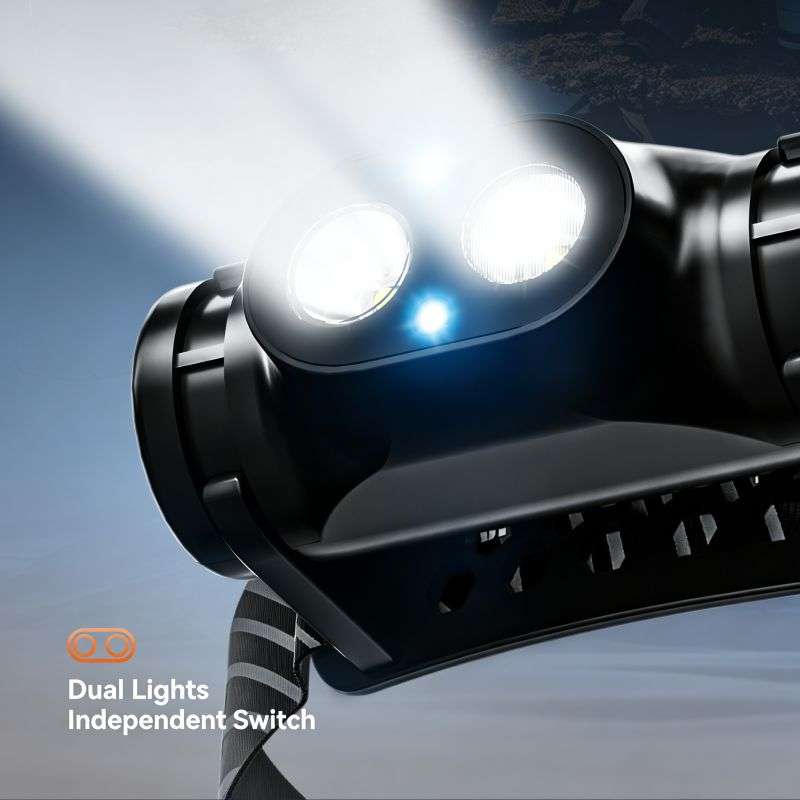
For example, an outdoor headlamp emphasizing intelligent design resonates with anglers:
- The sensor switch resolves the hands-occupied problem, controlling light with simple gestures.
- 15-hour runtime allows overnight fishing without recharging, eliminating battery anxiety. Switch between low-red and high-white light as needed.
- Lightweight (≈60g) and waterproof, it ensures comfort and reliability. Adjustable brightness and beam angles provide precision for tasks, from rigging hooks to observing distant terrain.
This lamp acts as a silent assistant, bridging you with darkness and water subtly and reliably.
Night Fishing Lighting Q&A
Question | Answer |
Besides red, is green light suitable for night fishing? | Green light can be supplementary in specific cases. Some fish are less sensitive to green than white, and green penetrates water moderately, with human eyes perceiving brightness well. Some anglers use green to observe distant floats or water. However, for eye night vision and minimal environmental disruption, red remains the undisputed primary choice, with green as tactical backup. |
Will my headlamp scare all fish in the area? How should I use it? | Not all fish are frightened. Predatory fish can be attracted by light (as it draws small fish/insects).General rules to avoid spooking cautious fish: Good night fishing lamps, like good technique, require precision and restraint. |
Night fishing is a silent dialogue with nature. Your gear, especially the headlamp, should aid this conversation, not intrude abruptly. Choosing a lamp that hides itself, appears precisely when needed, and accompanies you through the long night integrates technology into a meditative practice.
It becomes more than a tool—it’s a tacit participant in your night fishing ritual. Under red light, tying a rig and then extinguishing it to merge back into darkness, leaving only stars and water sounds, reveals that the right light does not conquer the night—it lets you listen to it deeply.