Headlamp Specs Decoded: A Practical Guide to Choosing the Right Light

Let’s be honest. Reading a headlamp product page can feel like you need an engineering degree. You’re bombarded with terms: lumens, beam distance, candela, IP ratings, and mAh. One claims to be the brightest, another the longest-lasting. It’s a sea of numbers where everything starts to look the same, and the fear of buying the wrong thing sets in. You don’t want to become an optics expert; you just want a good headlamp that won’t die on you halfway through a night fishing trip or leave you squinting on a hiking trail.
I’ve been there, staring at comparison charts until my eyes crossed. The truth is, those numbers aren’t marketing fluff—they’re a map. But you need the key to read it. This guide is that key. We’re cutting through the jargon and translating specs into real-world performance. Forget what sounds impressive; let’s talk about what actually matters for your adventures.
The Great Lumen Debate: Why More Isn’t Always Better
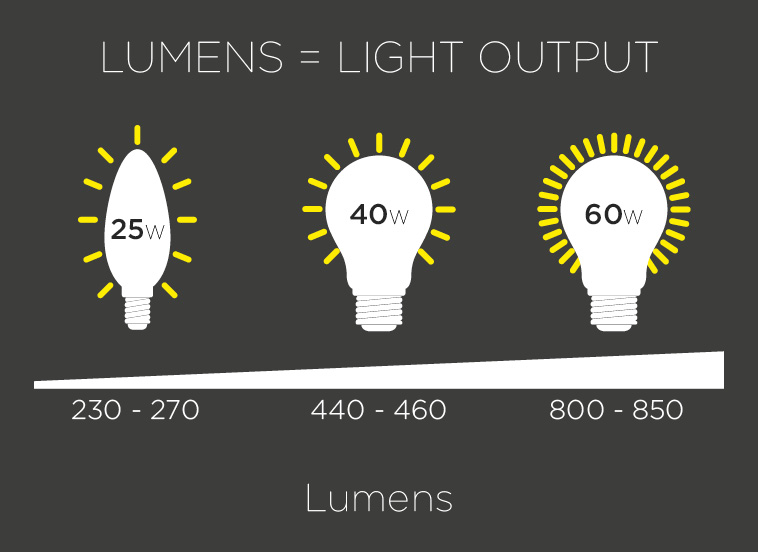
Lumens. This is the big one, the number everyone leads with. In simple terms, lumens measure the total amount of visible light coming out of the headlamp. More lumens = a brighter overall light. Sounds straightforward, right? Here’s the catch: a super-high lumen count is useless if it drains your battery in 30 minutes or creates a narrow, blinding beam that’s terrible for close-up tasks.
The Real-World Translation:
- 20-100 Lumens: Perfect for camping chores around the tent, reading in your sleeping bag, or walking the dog. This is your high-efficiency, long-runtime mode.
- 150-300 Lumens: The sweet spot for most hiking and running. It provides ample light to see the trail clearly 10-20 meters ahead without excessive battery drain.
- 500+ Lumens: This is your “wow” setting for search and patrol, scanning wide-open areas, or brief moments where you need maximum illumination. Use it sparingly.
The best headlamp isn’t the one with the highest max lumens; it’s the one with smart modes that give you the right amount of light for the task. A light that offers a 30-lumen low mode and a 300-lumen high mode is often more practical than one that only has a blinding 1000-lumen setting.
Beam Distance & Pattern: The “Flood vs. Throw” Dilemma
This is where lumens meet purpose. Beam distance (in meters) tells you how far the light can project a useful amount of illumination. But a number like “200m” doesn’t tell you how that light gets there.
- Flood Beam (Wide): Imagine turning on a room’s ceiling light. It illuminates a broad area right in front of you. Essential for camping, working in a crawl space, or night running, where you need to see obstacles at your feet and in your periphery.
- Throw Beam (Spot): This is a focused, laser-like beam that reaches far into the distance. Critical for search and rescue, cave exploration, or spotting a trail marker on a distant ridge.
The Real-World Translation: You need versatility. Look for a headlamp that explicitly offers multiple beam patterns or a balanced mix. A wide flood for setting up camp, a focused throw for checking out that noise in the distance, and maybe a combination beam that does a bit of both. The ability to switch between them is a game-changer.
The Weight & Comfort Paradox: 100 Grams Feels Like a Kilogram at Mile 5
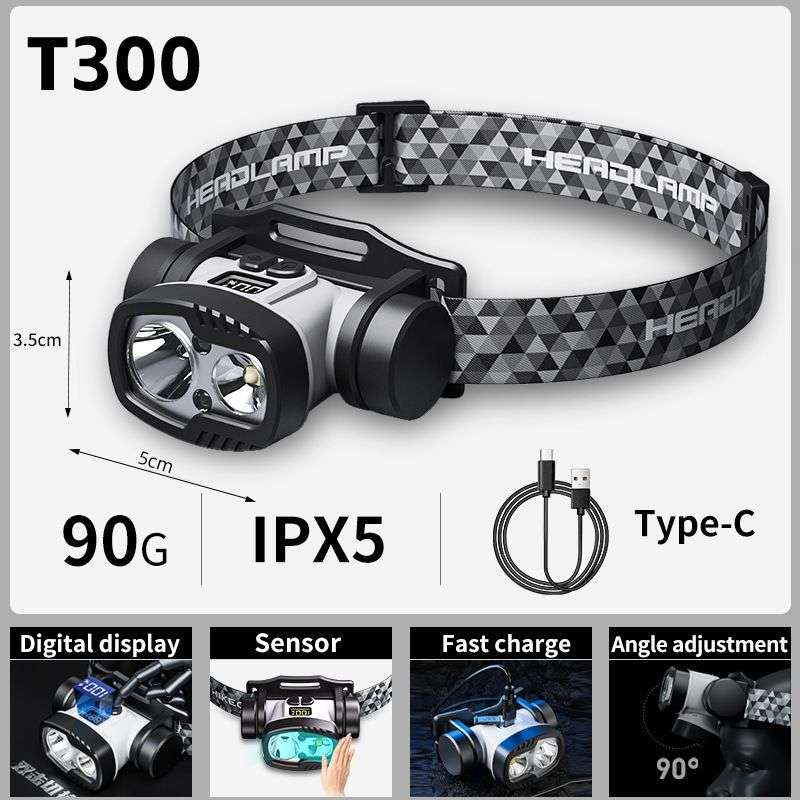
Spec sheets list weight in grams, but they can’t convey what that feels like on your forehead after an hour. For running or jogging, every gram counts, not just for comfort but for stability. A heavy light will bounce, no matter how tight the strap.
The Real-World Translation:
- Sub-50g: Ultra-light. You’ll barely feel it. Ideal for runners and fast-paced hiking.
- 50-100 g: The standard range for most general-use and work headlamps. With a good strap, it’s comfortable for extended wear.
- 100g+: These are often feature-packed or industrial models with large batteries. They’re built for power and durability, not for bouncing on your head during a sprint.
Comfort is in the strap system. Look for terms like “ergonomic,” “non-slip,” and “adjustable.” A poorly designed strap will make even a light headlamp feel like a burden.
Battery Life: The Most Misunderstood Number on the Box
“Up to 200 hours of runtime!” Sounds amazing, until you read the fine print: “…on the 1-lumen red light mode.” Runtime is always tied to the brightness mode. The most honest manufacturers provide a chart.
The Real-World Translation:
- Rechargeable is non-negotiable. In 2024, dealing with disposable batteries is a relic of the past. USB-C is becoming the gold standard for faster, universal charging.
- Look for the “Medium Mode” runtime. This is your most-used setting. A claim of “10 hours on medium (150 lumens)” is far more useful and honest than “200 hours on low.”
- mAh Matters, But Context is King. The battery capacity (e.g., 2600 mAh) is a factor, but a power-hungry LED on a high setting will drain it faster. Efficiency is key.
Putting It All Together: A Spec Sheet in Action
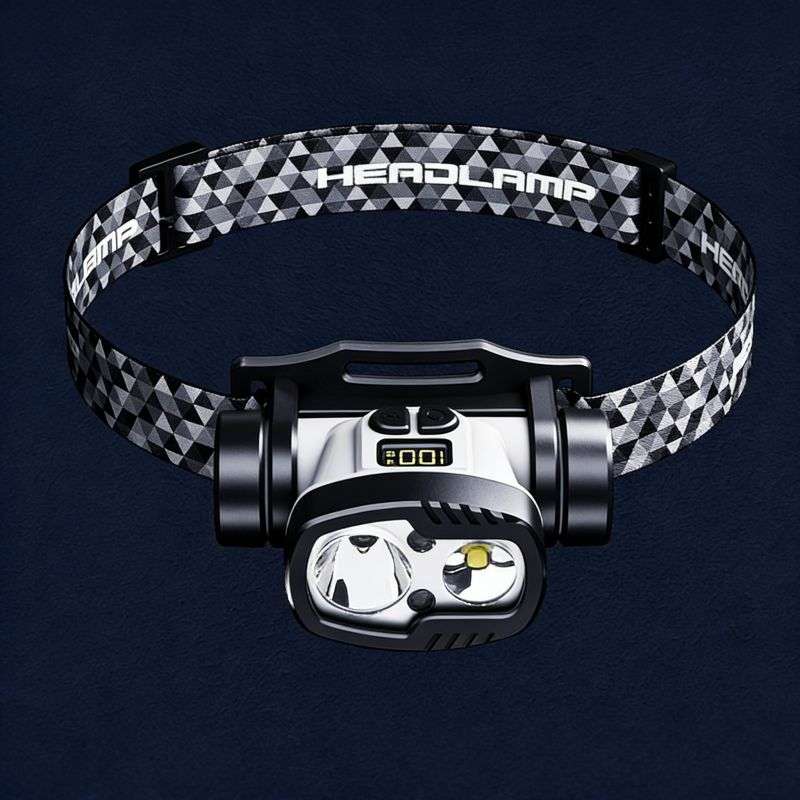
Let’s apply this logic to a real product. Take the Ultra Lightweight Running Headlamp. Its spec sheet tells a clear story for its intended user:
- Weight (91 g) & Strap Design: The “feather-light” build and “ergonomic strap ensure zero bounce” directly address the core runner’s need for comfort and stability. The weight is justified by the larger battery.
- Beam Pattern: It features a “wide-beam LED” for “visibility of paths, obstacles, and surroundings.” This tells you it’s optimized for flood, not throw—exactly what you need for navigating a trail.
- Power (8W) & Battery (2600mAh): The higher wattage LED paired with a high-capacity rechargeable battery explains how it can deliver “consistent, bright illumination” for “up to 10 hours of runtime.” It’s built for sustained performance, not just short bursts.
- Durability: “Sweat-resistant” is the key term here, addressing a specific environmental challenge for runners.
This isn’t just a list of features; it’s a coherent design philosophy focused on solving the specific problems of a night runner. The specs translate directly to on-trail performance.
FAQ: Your Spec Sheet Dilemmas, Solved
Q: Is a higher IP rating always better?
A: IP ratings (Ingress Protection) indicate dust/water resistance. IPX4 is fine for rain and sweat. IPX7 means it can be submerged in 1 m of water. For most hiking and camping, IPX4-6 is sufficient. Save IPX7/8 for cave exploration, kayaking, or extreme conditions.
Q: What’s the deal with red light mode? Is it necessary?
A: It’s not necessary, but it’s incredibly useful. Red light preserves your natural night vision, is less blinding to others in a tent, and attracts fewer insects. It’s a mark of a thoughtfully designed headlamp.
Q: Are motion sensors and other smart features worth it?
A: It depends on your use. For work or maintenance with dirty hands, a motion sensor (like on some industrial models) is a brilliant convenience. For simple hiking, a reliable physical switch might be preferable. Evaluate based on your most common, messy scenarios.
Your Light, Your Rules
Choosing the right headlamp is an exercise in self-knowledge. Are you a runner who values zero bounce above all? A camper who needs a long runtime and a good flood beam? A DIYer who needs hands-free control with dirty hands?
Let the specs guide you, but let your activities rule you. Ignore the dizzying “max output” wars. Instead, look for the honest numbers that match your reality: runtime on a usable setting, a beam that fits your terrain, and a weight that won’t ruin your adventure. When you find the light that checks your boxes, you’re not just buying a product—you’re buying confidence for every step after sunset.
Stop guessing and start choosing. Compare headlamp options for night hiking and running with balanced lumens, beam distance, and long runtime to match real outdoor needs.