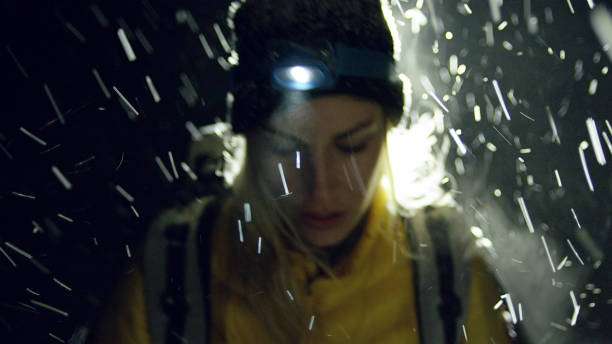
Master Headlamp Use: 7 Expert Rules for Hands-Free Night Safety

In a deep-night campsite, the only light suddenly extinguishes; while repairing a car, just as you free your hands, the headlamp slides down to your forehead; trekking downhill, the beam bounces wildly, failing to illuminate the path beneath your feet.
If you have experienced these moments, you understand—the quality of a headlamp is about far more than its brightness. It is about safety, efficiency, and even the success of an adventure. Most people focus only on lumens while ignoring a complete set of hidden rules on “how to truly use it.” Today, we discuss these crucial techniques to upgrade your headlamp from a mere “light” into a trustworthy partner.
Rule 1: Let Your Eyes Adapt to Darkness Before the Headlamp
Before flipping on a high-brightness beam, give yourself 30 seconds. Allow your pupils to dilate naturally and adapt to the ambient low light. This is not just to protect your night vision but to ensure that once the headlamp is on, you can more accurately judge distances and obstacles. Many people instantly switch to the brightest setting in emergencies; the intense contrast leaves the periphery pitch black, increasing the risk of collisions.
Rule 2: Beam Shape Is More Important Than You Think

Spot beams and flood beams are not meant to be switched at random.
- Spot Beam: Your “searchlight,” used to identify distant trail markers, observe peaks, or find lost teammates.
- Flood Beam: Your “ambient light,” providing broad, soft illumination at close range for camp cooking, map reading, or seeing the entire area under your feet to reduce visual blind spots caused by shadows.
High-end headlamps offer mixed beams or independent dual light sources, which is the true dividing line between professional players and novices.
Rule 3: Battery Management is a “Strategic Reserve.”
Never wait until the headlamp is completely dead to recharge. Treat battery levels as your “safety margin.” For activities exceeding 2 hours, even if the nominal battery life is sufficient, bring spare batteries or a power bank.
Low temperatures severely degrade lithium battery performance; in cold environments, keep spare power sources close to your body to maintain their activity.
Remember, a headlamp with adjustable brightness in energy-saving mode is far more reliable than fumbling with a phone flashlight in the dark.
Rule 4: Always Prepare a “Backup Light Source”
This is the first iron rule of outdoor safety. Your headlamp is the primary one, but it is not the only one. A lightweight keychain light or even a phone can serve as an emergency backup. When the main headlamp fails or you need to hand your light to a companion, this backup is your safety net. It doesn’t need to be extremely bright, but it must be within reach.
Rule 5: Learn “Anti-Glare” Etiquette
In group activities, when talking face-to-face, instinctively aim your beam downward or block it with your hand. Direct intense light instantly blinds the other person’s night vision, which is both impolite and unsafe. Similarly, avoid using high-brightness modes inside a tent; the diffuse glare off the tent walls affects everyone inside.
Rule 6: Adjust, Then Adjust Again, Until You Forget It’s There
A single elastic strap determines your comfort for the entire night. Too tight causes headaches; too loose leads to sliding while running or leaning over. The optimal position is just above the center of the eyebrows. Adjust the beam’s landing point by tilting the lamp head, rather than constantly nodding or tilting your head. An ergonomically designed headlamp with balanced weight distribution should be nearly imperceptible after several hours.
Rule 7: Maintenance Prepares for the Next Darkness
After the activity, clean sweat and dirt from the headband and check the lens for wear or water spots. If the headlamp is waterproof, ensure sealing caps are tight. For long-term storage, remove the batteries or keep them at half charge to extend battery life. Equipment that is treated with care will always repay you at the critical moment.
Making Professionalism Simple: When “Skill” Merges with “Tool”
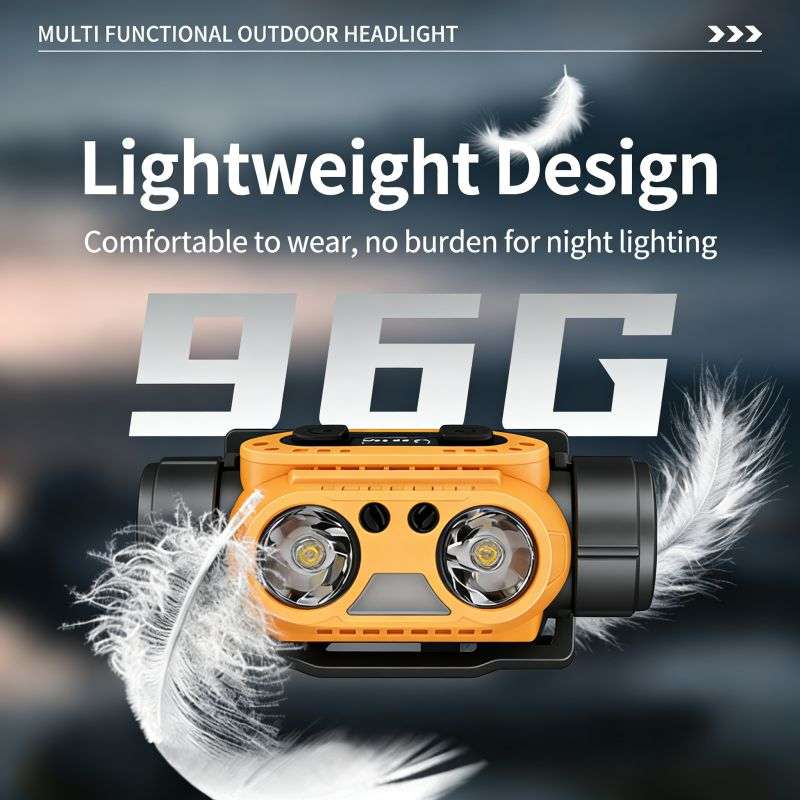
By mastering these rules, you have surpassed 90% of users. But is there a way for the tool itself to simplify the process? For example, how do you elegantly switch the light when your hands are greasy, you’re carrying heavy objects, or you’re wearing gloves?
This is where intelligent design shines. Imagine repairing a car chassis or assembling woodwork; you simply wave your hand in front of the sensor, and the light responds. This “Motion Sensor” design, combined with a rugged industrial-grade headlamp, is the solution born for demanding scenarios.
[Discover the ultimate hands-free lighting solution for your next project.]
It typically features a rugged ABS shell to withstand impacts, multiple brightness levels for everything from fine inspection to large-area lighting, and long battery life. This isn’t just a cool feature; it’s a deep understanding of the user’s core pain points—maintaining work continuity and hand cleanliness.
Frequently Asked Questions (FAQ)
|
Question |
Professional Answer |
|---|---|
|
Can the headlamp stay on all night as a tent light? |
Yes, but not on high. Use “Endurance Mode” or low brightness. Hanging it at the top of the tent provides soft, reflected light. High brightness generates heat and drains power quickly. |
|
Is a professional motion-sensor headlamp only for workers? |
Absolutely not. It is perfect for night fishing (wet hands), campers (dirty hands), or home DIY projects (pipe repairs). Any scenario requiring hands-free, touchless control benefits from it. |
Conclusion
A headlamp is never just about lighting the three meters in front of you. It is a precision tool integrating optics, ergonomics, and energy management. Applying these “Rules of Darkness” means using equipment with an expert mindset. Choosing a headlamp that simplifies your steps turns professional knowledge into your instinctive advantage.
Next time darkness falls—whether in the mountains, on a job site, or in your backyard—you will possess not just a beam of light, but a sense of calm control. Because true lighting begins in the mind and ends with the tool.