From Track to Trail: How a Runner Rediscovered the Night with a Headlamp

My name is Mike, and like many living on the outskirts, running is my way to counter sedentary life and clear my mind. But as a 9-to-5 office worker, the day belongs to the company, and only night and early morning belong to me. Gradually, my running path became limited by the glow of streetlights—from my doorstep to the park loop and back. Safe, yet monotonous to the point of numbness. Until that autumn, when daylight shortened, I seriously considered buying a headlamp. I never imagined this decision would completely transform my relationship with the night and the outdoors.
Initial Motivation: Simply Running One More Mile Safely
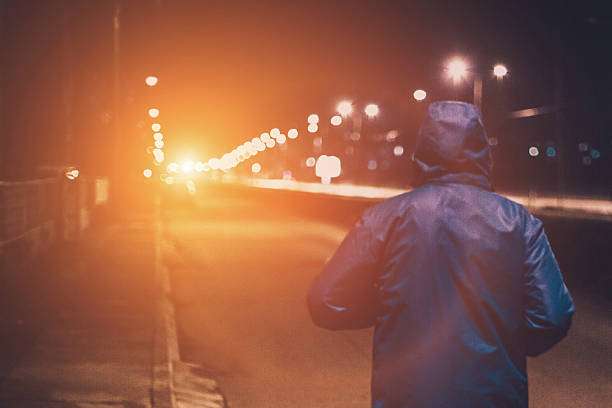
At first, the motivation was simple. I didn’t want to be forced to end my run because of sunset, nor confined to the fixed routes illuminated by streetlights. I needed light—hands-free, following me as I moved. After researching for a few nights, I chose a running-specific headlamp touted as ultra-lightweight and shake-free.
The first time I went out wearing it is still vivid in my memory. Press the switch, and a wide, even beam spilled from my forehead—not a blinding pillar, but like a car’s low beam, steadily lighting the asphalt ten feet ahead. At 91 grams, it was almost imperceptible. The headband fit so perfectly that no matter how I accelerated or climbed hills, the light felt like it naturally emanated from my eyes.
The experience was revolutionary. Suddenly, streets, alleys, and neighborhood paths opened to me. I was no longer a prisoner of streetlights. I could explore quiet streets unnoticed during the day and enter a small forest untouched by light pollution, with only my breathing and leaves crunching beneath my feet. The headlamp illuminated more than the path; it illuminated a long-lost freedom. It became my silent companion, a loyal guide lighting just a few meters of private space in front of me.
An Unexpected Twist: A Spontaneous “Light Adventure”
The change came during a casual weekend gathering. My friend Sara, an avid hiker, invited me on a “leisure night climb.” I glanced at my running shoes and my only lighting gear—my headlamp—and hesitated. “Just think of it as a different kind of night workout,” she encouraged.
So, one Saturday evening, with a runner’s light gear and my headlamp, I arrived at the mountain base. The initial fire trail was gentle, and my headlamp performed perfectly—a wide beam revealing every loose stone. But as the slope steepened and the trail became rugged, with intertwined roots and exposed rocks, I quickly noticed its limitations.
When judging distant turns or steep terrain, my light didn’t seem to “penetrate” enough. Worse, after a sustained uphill, I glanced at my phone and realized two hours had passed, and my headlamp had switched from steady high brightness to flashing warning mode—low battery. Only after Sara lent me a spare light could we continue.
Yet, in that slightly awkward moment, when I stopped, turned off all lights, and waited for my eyes to adapt to darkness, a miracle happened. The city’s clamor vanished, replaced by profound, enveloping silence. The sound of pines, distant streams, and even an owl’s call became unusually clear. When Sara signaled us to turn on lights again, she used red mode. In that eerie, cinematic red view, I saw my companions’ faces as if they were wearing ancient ceremonial masks; the forest became an alien landscape. At that moment, I realized the night wilderness and familiar night streets are two entirely different worlds. And I had clumsily but genuinely knocked on the door of the latter.
Evolution of Gear and Deepening Experience
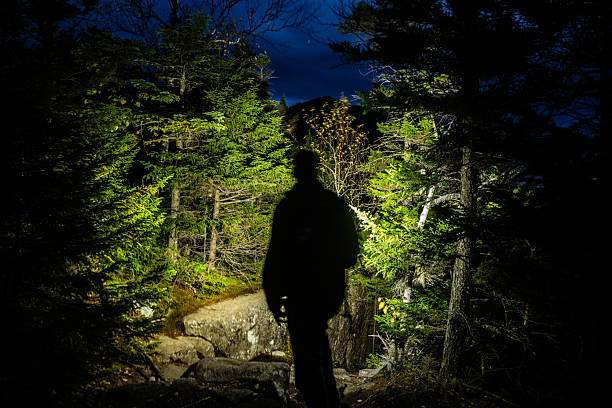
After that night hike, my understanding of “illumination” changed completely. My running headlamp remains my closest companion; weekly night runs are impossible without it. Its wide-beam LED and anti-shake headband are still perfect for paved and compacted dirt paths, providing safety and freedom while running.
But I also realized light, like shoes and backpacks, must adapt to terrain. Running, especially road running, requires continuous, stable, shadow-free illumination of feet and nearby surroundings, with weight and comfort as top priorities. Hiking or mountaineering in complex terrain demands more: longer battery life for hours of trekking, flexible spot/flood switching to handle foot-level traps and distant markers, and sometimes red light to preserve collective night vision or read maps.
My running headlamp is a perfect specialized tool, but exploring broader night worlds requires a comprehensive “light toolbox.” This doesn’t mean replacing, but expanding. I began studying different beam modes, battery systems, and lightweight multi-day hiking solutions. Each study felt like translating the grammar of the night’s new language.
Sincere Advice for Cross-Disciplinary Enthusiasts
- Respect existing gear: your ultra-light headlamp is the hero for stepping into night exploration. Its design philosophy—ultimate lightness and stability—is a golden rule for any outdoor activity. It is perfectly capable of short, mild hikes.
- Listen to new environment needs: planning to venture into more complex, remote, or longer nighttime settings? Evaluate honestly: battery life, beam versatility (spot/flood/red), and overall reliability (e.g., waterproofing) become as important as weight.
- Light is a tool, and curiosity is the engine: the best headlamp cannot replace the courage to step out and into darkness. It’s a key, but the hand turning it is your insatiable curiosity.
Today, I have more than one headlamp in my gear. But when I lace up on familiar streets for a pure run, I still take the original 91-gram companion. It’s more than a lamp—it’s the start of my personal exploration story, tangible proof of how light can expand life’s boundaries.
Quick Q&A for Night Explorers
|
Question |
Answer |
|
How to maximize safety when running at night on streets or in parks? |
Beyond reflective clothing and informing others of your route, headlamp use is the core. Ensure the beam is wide enough to illuminate potential hazards on both sides (curbs, parked cars). Avoid overly concentrated long-range mode that neglects nearby obstacles. Always assume drivers cannot see you, even with light. Choose stable, non-flashing illumination (unless signaling) for predictable movement for others. |
|
What to do if you see wildlife eye reflections (e.g., coyotes, deer) during night outdoor activities? | Stay calm—most wildlife fears you more. Avoid shining the headlamp directly into their eyes; it may be seen as a threat. Stop, speak calmly and firmly to appear large. Usually, animals move away. Slowly back off; don’t run. A headlamp helps you see the animal’s position and behavior, not to scare it. Knowing local wildlife and habits is the best preparation. |
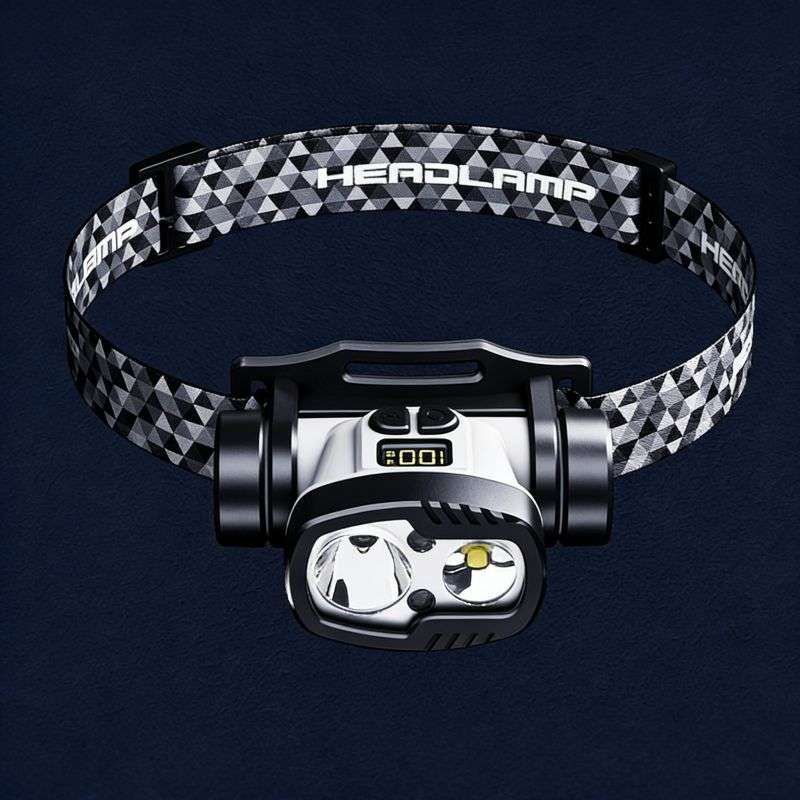
This story has no “ultimate gear” conclusion. It’s about perspective: from seeing a headlamp as a tool to fix “invisibility” to seeing it as an invitation to experience another side of the world—the half wrapped in night, breathing under moonlight and silence.
You may never have thought of night mountaineering or considered yourself just a runner. But next time you put on your headlamp and run within its small illuminated patch, occasionally lift your gaze and see the deep darkness beyond. Another universe awaits there.
Your curiosity, paired with this reliable forehead light, is all you need to start countless adventures. Tonight, from the next step, discover the secrets of the night that are rightfully yours.