Why Effective Lumens Matter More Than Maximum Lumens in Headlamps

We all know someone (or maybe it’s ourselves) who fixates on the largest number on a headlamp product page—“Maximum Lumens.” 3000, 5000, even higher. Whispering in the mind: “The bigger the number, the better; the brighter, the safer.”
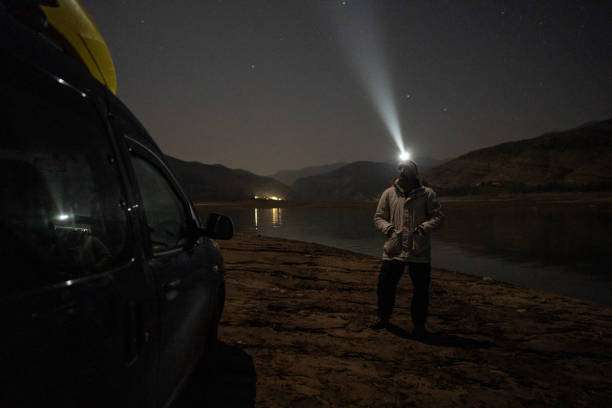
Then you take this “mini sun” into the woods, only to find in damp forests the intense beam reflects crazily on water vapor and leaves, dazzling your eyes, or the battery drains at a visible speed while the roots underfoot remain hidden in shadows.
Here lies one of the biggest misconceptions in outdoor lighting: equating lumens (luminous flux) with practical brightness. Today, we’ll fully decode “lumens” and explore why a savvy outdoors person may deliberately forgo dazzling high-lumen numbers in favor of a seemingly modest but more practical headlamp.
What Are Lumens? A Faucet Analogy
Let’s use a simple metaphor to understand this abstract concept.
Imagine a faucet. Lumens are like the total amount of water the faucet pours in a unit of time. It tells you the volume, but not how that water comes out.
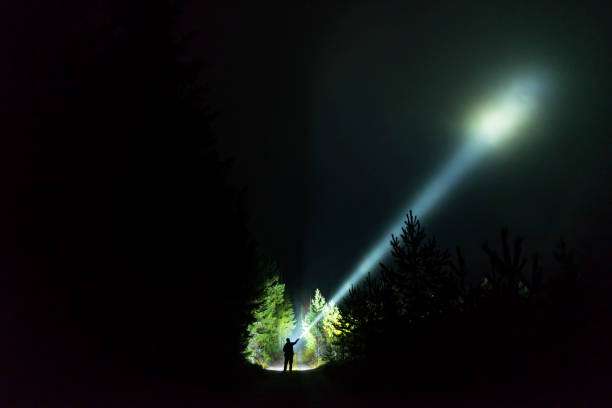
If the faucet connects to a high-pressure pipe, all water shoots out as a straight jet, reaching far but covering a narrow area. This is like a high-lumen, focused-beam headlamp.
If the faucet attaches to a showerhead, the same total volume spreads as countless tiny droplets, covering a wide area gently and evenly, but the reach is short. This resembles a mid-lumen, wide-beam headlamp.
Now you get it: lumens measure total light output, but your actual experience depends on how that light is distributed—which is where beam shape and intensity come into play.
The Overlooked Truth: Intensity and Beam Shape Rule
Illuminance (measured in lux) determines how bright an object appears to your eyes. It’s the light flux per unit area. The same lumen value concentrated on 1 m² produces high lux (very bright), but spread over 10 m² produces low lux (much dimmer).
Beam shape is the director controlling how light is distributed, determined by the headlamp’s optical lens or reflector design:
- Deep, smooth reflector: Like a satellite dish, it collects LED light into parallel rays, creating a concentrated, long-range beam. The hotspot is small and extremely bright; the surroundings are nearly dark.
- Shallow, textured (orange peel) reflector or flood lens: Intentionally spreads light into a wide, even, soft beam. The brightness difference between the center and edges is small, illuminating a large area in front.
Thus, a 5000-lumen headlamp with a deep-focus design versus an 800-lumen lamp with high-quality flood optics illuminating your path 5 meters ahead: the latter likely provides better clarity and safety. Most of the former’s light “wastes” shooting into the distance, while the latter fills every corner of your visual field.
Context Matters: How Many “Effective Lumens” Do You Need?
Parameters alone are meaningless without context. Let’s examine which beam types and “effective lumens” rule in various outdoor scenarios.
Scenario 1: Camp Activities and Tent Organization
Real Need: Soft, even light to illuminate a small, fixed area (cooking station, inside tent), avoiding glare, and saving battery.
Effective Lumens Required: Very low. 30–100 lumens in flood mode suffices. Using high-lumen spot mode would blind you, waste battery, and become the camp’s “most annoying light pollution.”
Scenario 2: Forest Hiking & Trail Running
Real Need: See complex roots, rocks, and uneven ground while perceiving peripheral terrain and obstacles (low branches). Require hours of stable illumination.
Effective Lumens Required: Moderate, but beam shape is critical. 150–300 lumens in wide, even flood mode is key—it eliminates tunnel vision and ensures panoramic safety. A medium-intensity spot mode for occasional distant turns or trail markers suffices. Here, an 800-lumen quality flood lamp is far more practical than a 3000-lumen pure spot lamp.
Scenario 3: Search, Cave Exploration, or Long-Distance Navigation
Real Need: Pierce darkness, rain, or fog to identify distant objects or paths.
Effective Lumens Required: High. 500+ lumens in strong spot mode as primary, with flood mode for close-up work. High lumens then truly show strategic value.
Product Wisdom: Balance Trumps Numbers
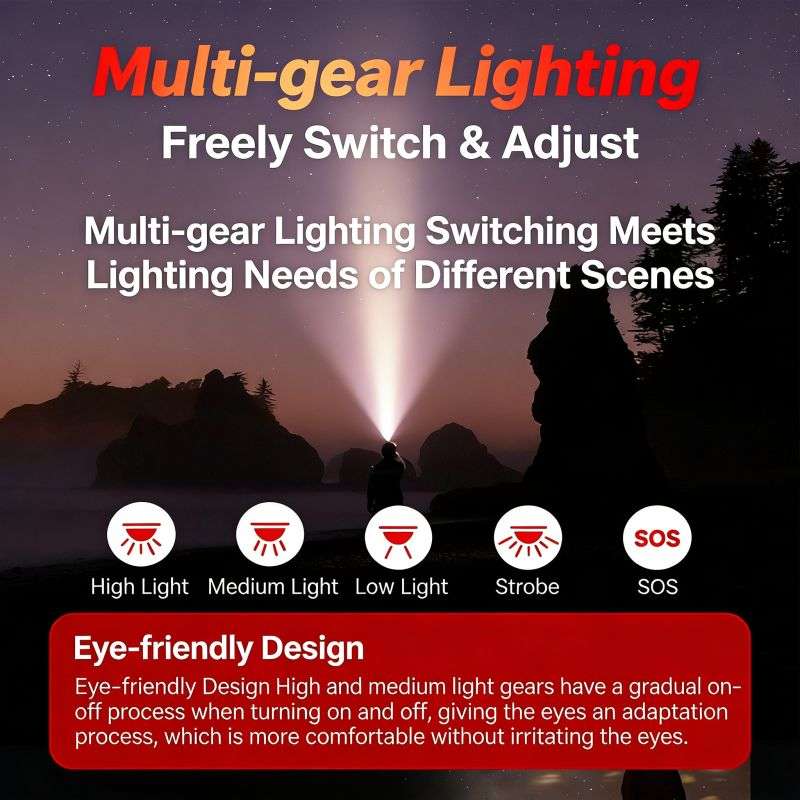
A well-designed headlamp demonstrates balance intelligence. Take a multifunction rechargeable model: it doesn’t blindly chase the highest lumen number but switches modes to intelligently allocate light for effective lumens in every scenario.
It might offer a wide flood mode, gently spreading most light, perfect for camp tasks, providing 200 lumens—each lumen used efficiently for a shadow-free near environment.
When needing to spot distant sounds or paths, switch to focused spot mode, concentrating light—achieving “high lumens” to illuminate targets 100 meters away. This on-demand distribution is smarter than a single blinding mode.
Moreover, this design integrates rechargeable batteries and intelligent runtime management. Flood mode may last 12 hours, letting you use it at camp without worry. The lightweight (e.g., 42 g) and waterproof design ensures the lighting system accompanies every adventure comfortably and reliably.
Quick Q&A: Lumens vs. Practicality
|
Question |
Answer |
|
Aside from lumens, what parameters matter most when buying a headlamp? |
Prioritize:
Combine these to see through marketing and find a lamp that truly serves you. |
Why does red mode often have an extremely long rated runtime? | Two reasons: Red LEDs are highly efficient, needing less power for the same perceived brightness. Also, red light usage is low intensity for map reading or tent work in darkness, protecting night vision. Manufacturers rate runtime at extremely low lumens, making the number look huge (e.g., 100 hours). It reflects “just enough” wisdom, not battery magic. |
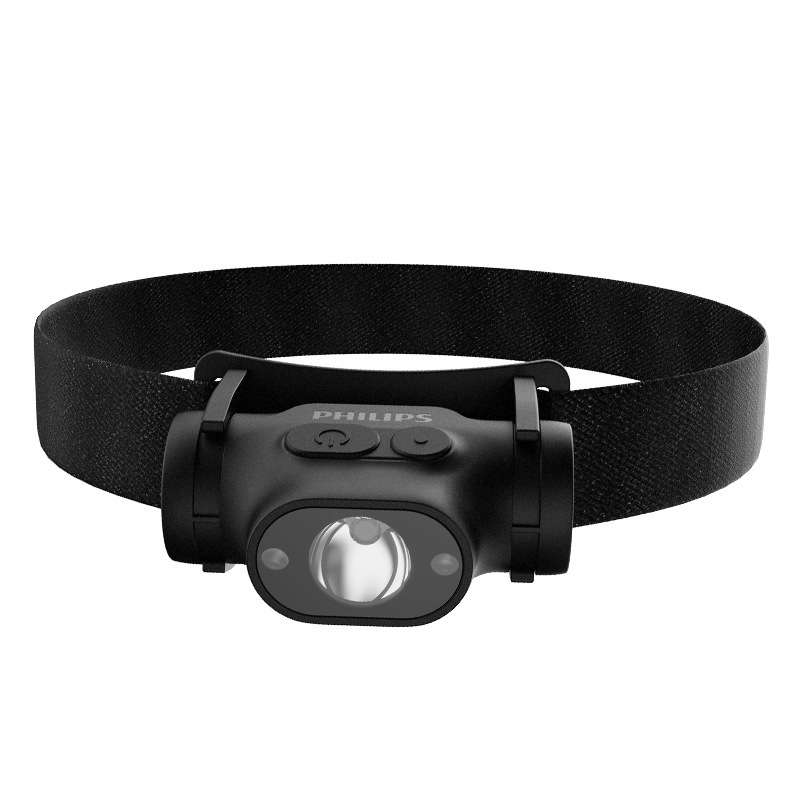
It’s time to refresh our perception of illumination. The real value of a headlamp lies not in raw light output, but in whether it provides the right light, at the right time, in the right place—effective lumens that keep you safe and comfortable.
Next time a giant lumen number catches your eye, ask: how much of this light truly illuminates my path? How much is wasted in glare or distant projection? How much translates into effective lumens, ensuring safe steps forward?
Choosing a balanced, well-distributed headlamp means selecting a companion in darkness who is both bright and mindful. It doesn’t blindly pierce the night; it intelligently sketches a clear, safe, comfortable world. That is true progress in lighting technology.