How to Choose the Perfect Headlamp for Hiking, Running, and Camping

Standing in front of dazzling shelves, looking at various headlamps ranging from dozens to thousands of dollars, do you feel a sense of confusion?
Their lumens range from tens to thousands, modes are diverse, and promotional slogans all claim to be “all-around” and “ultra-bright.” Ultimately, we often choose one that looks “about right” based on feeling or price—but the result is frequently insufficient brightness during hiking, heavy shaking during night running, or battery depletion before midnight while camping.
Choosing a headlamp should not be a gamble. It is a rigorous “need-matching” process: not looking for the most expensive or brightest, but finding the one that understands your current scenario best.
A clear “cognitive map” can help you clear the mist and reach the core of the decision.
Step 1: Ask Yourself, How Far Does the Light Need to Reach? — Defining Core Scenarios
All technical parameters should serve the scenario. Before thinking about brightness, ask yourself: Where and in what state will I primarily use it?
Generally, we can categorize scenarios into two types:
- Slow-speed, close-range fine work, such as setting up a tent while camping, cooking at the campsite, reading a map, or home repairs and engine checks. Here, you need a wide, uniform floodlight that illuminates a large area in front of you with soft light to avoid visual fatigue caused by intense light spot contrast. A basic lighting level headlamp (e.g., above 40 lumens) is usually sufficient.
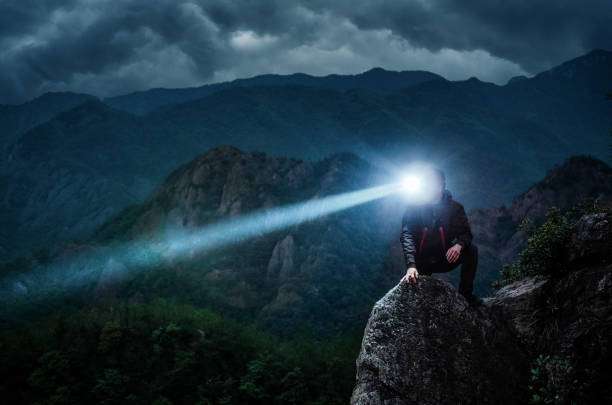
- Fast-speed, mid-to-long distance exploration: Such as night mountain hiking, trail running, cycling, or climbing. You need to see the path, rocks, and roots dozens of meters ahead to judge and react early. A concentrated, penetrating spotlight is crucial. It is recommended to choose a headlamp with at least 100 lumens or more for these activities.
Simply put, “Slow for near, fast for far.” A headlamp with multiple lighting modes (flood, spot, and mixed) allows you to flexibly respond to scenario transitions and is a safer choice.
Step 2: Understand Parameters, Avoid the “Fake Specs” Trap—Focus on Real Performance
Once the scenario is clear, let’s decode those unavoidable parameters. Don’t be misled by a single high value; comprehensive understanding is key.
Brightness and Beam (Lumens and Light Patterns)
Lumens (lm): Measures the total amount of light emitted. Higher numbers are brighter, but it’s not the only standard. A 200-lumen spotlight may shine further than a 300-lumen floodlight.
Beam Type: This relates directly to Step 1. Spot beams are concentrated with a long range; flood beams are dispersed with a wide scope. High-quality headlamps often feature dual light sources or zoomable optical systems to achieve “both near and far” coverage.
Anti-pit Tip: Be wary of low-priced, high-lumen claims. Falsifying brightness is a common tactic of small factories, and ultra-high brightness often comes at the cost of sharply reduced battery life.
Runtime and Power Supply (Hours and Batteries)
Runtime is always tied to the brightness level. The “maximum runtime” labeled by manufacturers is usually measured at the lowest brightness; be sure to focus on the runtime data for the modes you use most often.
The power supply method is an easily overlooked but vital choice:
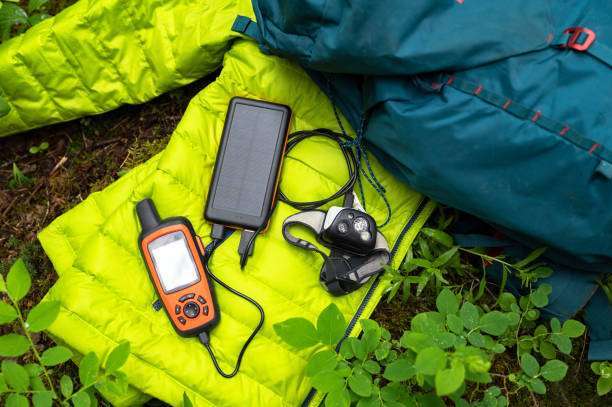
- Rechargeable: Environmentally friendly and economical, suitable for routine activities with stable charging conditions. USB-C interfaces have become mainstream.
- Battery-powered (e.g., AA/AAA): In remote areas without charging or as emergency reserves, replacing batteries is an irreplaceable safeguard. Some models support dual-power modes, providing great flexibility and security.
The wise approach is to choose a model with a runtime that leaves more than a 30% margin based on your longest single activity duration.
Sturdiness and Reliability (Weight and Protection)
Weight and Wearing: This is the core of comfort. A headlamp designed for sports often has the core advantage of extreme lightweight and an anti-shake headband design. Ergonomic elastic headbands ensure stability during vigorous exercise like running, remaining burden-free for long periods. After all, a headlamp that makes you forget its existence is a good headlamp.
Protection Rating (IPXX): This index tells you how “tough” it is. IPX4 protects against splashing water (light rain); IPX6 protects against powerful water jets (heavy rain); and IP67/IP68 are dustproof and submersible, providing protection for extreme outdoor weather. Choose based on your environment—rather high than low.
Step 3: Ultimate Decision—A Three-Step Process from Scenario to Product
Now, let’s connect all the information above into a clear decision-making flow:
|
Phase | Key Questions/Actions |
|---|---|
|
1. Set the Tone |
Am I hiking (need long range), camping (need floodlight), or commuting/running (need lightweight stability)? |
|
2. Define the Baseline |
What is the minimum brightness, necessary runtime, and lowest protection level (e.g., IPX5 for rainy hikes) required for this scenario? |
|
3. Screen by Experience |
Among products meeting the baseline, prioritize wearing comfort, ease of operation, and power flexibility. |
By following this process, you transform from a passive receiver of information into an active screener, precisely finding the right partner tailor-made for you.
Frequently Asked Questions (FAQ)
Q: Do I need to buy multiple different headlamps for different activities?
A: Not necessarily. The key is to choose a headlamp whose “functions cover” your core needs. For example, if you mainly do “hiking + camping,” choosing a lamp with both a strong spotlight and comfortable floodlight, sufficient runtime, and adequate waterproofing is enough. Models designed for a single extreme sport (like ultra-light racing trail runs) are the only ones that truly require specialized purchase.
Q: What is the use of the red light on a headlamp? Is it just decoration?
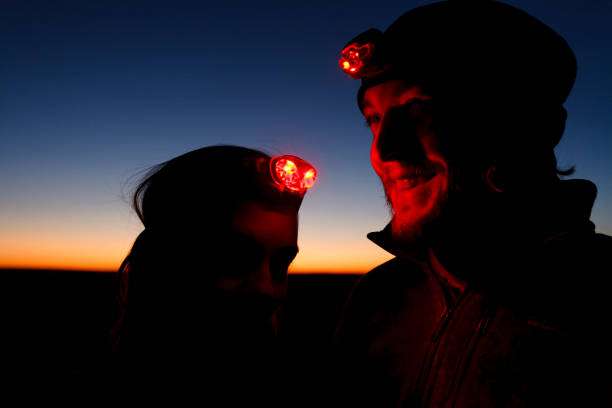
A: The red light mode is by no means a gimmick; it is a very practical feature. It has three main uses: protecting night vision (red light doesn’t cause pupils to shrink rapidly); avoiding insects (most insects are not sensitive to red light); and acting as a signal light (for warnings or SOS). It is a feature highly valued by experienced outdoor enthusiasts.
Conclusion
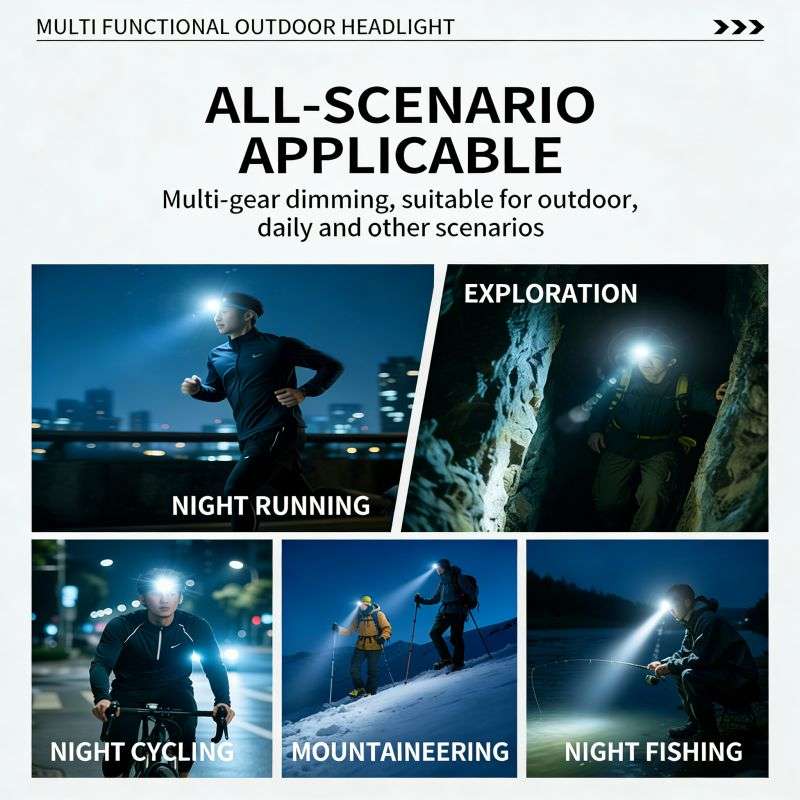
Choosing a suitable headlamp is essentially matching a reliable guarantee of light to your specific activity scenario. It doesn’t need to be perfect in every aspect, but it must perform solidly on your core requirements.
Next time you face a choice, stop and walk through the “Scenario-Parameters-Experience” steps in your mind. You will find that the best lamp is not the most dazzling one, but the one that merges silently into your actions, lighting the way when needed and making you feel safe without even noticing it’s there.
Start by understanding yourself and let technology serve you. I wish you find that partner who understands you best in the dark.