IP Ratings Demystified: Choosing the Right Headlamp for Any Environment

Have you ever had this experience? A sudden night rain half-dampens your enthusiasm for hiking, and worse, that headlamp claiming to be “waterproof” starts to flicker, dim, and finally quit altogether, leaving you on a dark and slippery mountain path.
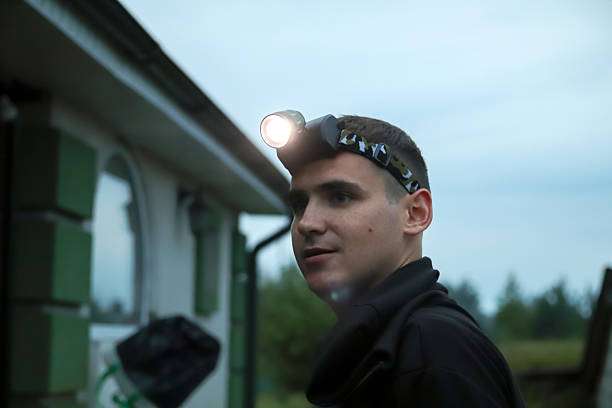
Or, while repairing your car in the garage, flying dust quietly creeps into the crevices of your headlamp, turning the once clear beam murky and dim.
In these frustrating moments, the problem often isn’t brightness or battery life but a critical parameter that is easily overlooked: the protection rating.
It is a code consisting of “IP” and two numbers that determines how faithfully your headlamp can perform in harsh environments. Today, we will crack this code and see how it silently guards your every adventure and task.
Not Just Rainproof: Decoding the “IP” Code
“IP” stands for “Ingress Protection.” The two numbers following it represent the levels of protection against dust and water, respectively.
- The first digit (0-6): Indicates the protection capability against solid foreign objects (primarily dust).
- The second digit (0-9): Indicates the protection capability against water.
This rating is not a marketing gimmick but is derived based on strict international standard tests.
For example, a headlamp claiming an IP66 rating means it has passed tests for being “completely dust-tight” and “resistant to powerful water jets.” The higher IP68 rating means it can withstand the rigors of long-term immersion underwater (usually under specific depths and times).
From Daily Life to Extreme Environments: Which Level Should You Choose?
Different activity scenarios have vastly different protection requirements for headlamps. Choose the right level, and it’s a reliable partner; choose wrong, and it might become a “failure specialist” at a critical moment.
|
Scenario |
Recommended Rating |
Protection Capability |
|---|---|---|
|
Daily Home & Light Outdoor |
IPX4 – IPX5 |
Resists rain droplets, splashes, or sweat. |
|
Serious Outdoor & Bad Weather |
IPX6 – IP67 |
Resists powerful water jets and short-term immersion. |
|
Professional Work & Extreme Adventure |
IP68 and above |
Highest level of dust and water protection for extreme conditions. |
Daily Home and Light Outdoor (IPX4 – IPX5)
If you mainly perform repairs in a dry garage, organize items in the yard, or go for a night jog in a city park, then IPX4 (splash-proof) or IPX5 (jet-proof) is usually sufficient. They can withstand accidental rain, splashes, or sweat, enough to handle most daily and light outdoor scenarios.
Serious Outdoor and Bad Weather (IPX6 – IP67)
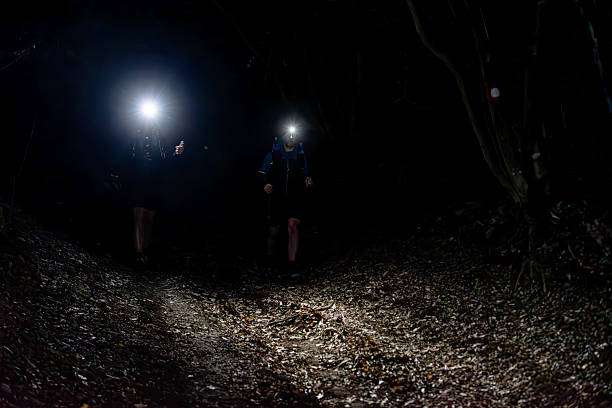
When you start mountain hiking, camping, trail running, or night fishing, weather and environments become unpredictable.
At this time, you need at least IPX6 protection. Headlamps of this level can withstand the impact of large waves or strong sprayers, meaning they work stably through sudden heavy rain, splashes when crossing streams, or heavy sweating.
IP67 goes further; besides strong water jets, it can be immersed in water for a short time (e.g., 1 meter deep for 30 minutes) without being affected, making it suitable for more extreme humid environments.
Professional Work and Extreme Adventure (IP68 and above)
For professional cave exploration, ice climbing, mining operations, or working long hours on dusty construction sites, IP68 is the more reassuring choice.
It provides the highest level of dust and water security, ensuring that in mud, sand, dust-filled, or completely submerged extreme conditions, the light still won’t go out.
Simply put, the core principle of choosing a protection rating is “Better high than low.”
A headlamp with a higher protection rating not only handles planned activities but also serves as your insurance policy when facing unexpected situations.
[Want to see the detailed IP waterproof standard?]
Invisible Details: The Design Philosophy Behind High Protection Ratings
Achieving a high protection rating is far from as simple as adding a rubber ring. It reflects the meticulous design of the product from the inside out.
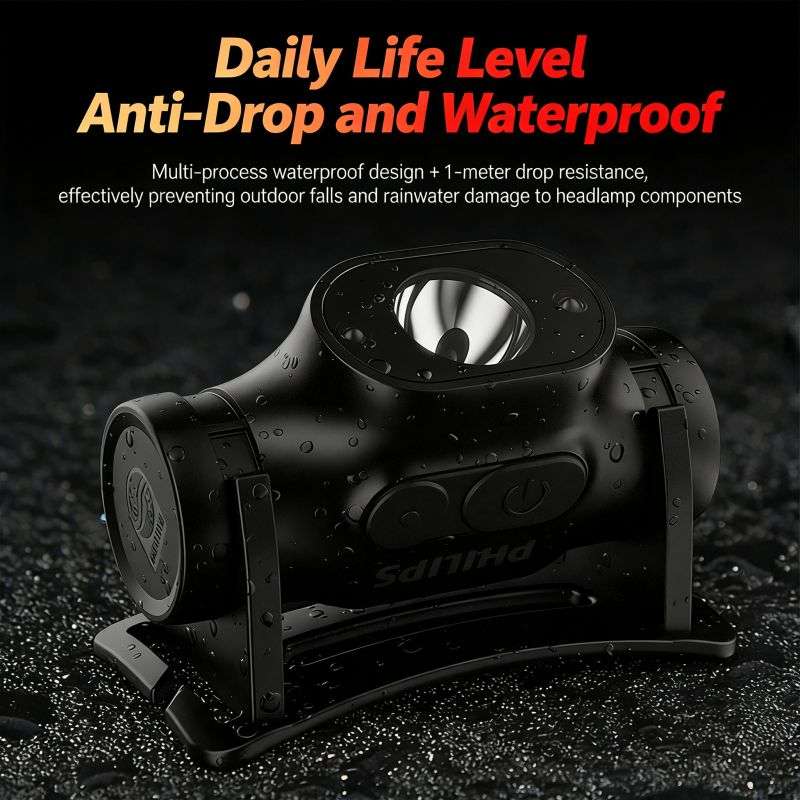
For instance, a headlamp designed for harsh outdoor environments often builds its high protection on a one-piece solid body and a precision sealing structure.
This design means all buttons, interfaces, and lenses are tightly encapsulated, effectively blocking the intrusion of water vapor and dust.
Meanwhile, to ensure the balance of heat dissipation and sealing during high-intensity use, the internal circuit and battery compartment layout also require careful consideration.
Additionally, the headband material and the connection to the lamp body may use special treatments to ensure stability and sealing in various postures and environments.
When you choose a high-protection headlamp, you are not just choosing a parameter but a proven system engineering that protects core components in complex environments.
This reliability hidden in the details is precisely your greatest source of security in darkness and chaos.
Frequently Asked Questions (FAQ)
Q: My headlamp is labeled waterproof; why did it fog up after one rain?
A: This is likely because the actual protection rating of the product is insufficient, or the seals are aging or damaged. True waterproof ratings have clear standards (like IPX6).
Fogging indicates that water vapor has penetrated the interior, which not only affects lighting but may also damage the circuitry. It is recommended to stop use immediately and dry it; next time you buy, look for clear IP protection marks rather than vague “waterproof” claims.
Q: In IP ratings, must both numbers be met simultaneously? For example, IP67.
A: Yes. The IP rating code is a whole.
Taking IP67 as an example, “6” represents completely dust-tight (dust cannot enter), and “7” represents short-term immersion (usually meaning immersion in 1 meter of water for 30 minutes). It must satisfy both test standards.
Some products may only label one number (like IPX7), which usually means the dust rating was not tested or certified, only the waterproof rating.
Conclusion
When shopping for a headlamp, lumens and battery life are certainly eye-catching, but the protection rating is the silent cornerstone.
It determines whether your gear is a “fair-weather toy” or an “all-around comrade.” Cracking the IP code is understanding the promise the product makes when facing wind, rain, dust, and sand.
Next time you hesitate among a dazzling array of products, take another look at that small label composed of “IP” and two numbers.
Based on the mountains, rivers, and seas you will visit and the challenges you will face, choose a sufficiently strong “armor” for your light.
Because the most trustworthy light is the kind that shines steadily for you, no matter how harsh the environment.
Explore high-protection headlamps built for outdoor adventures, extreme weather, and professional work safely.