Headlamp as Your Smart Outdoor Companion: Beyond Simple Illumination

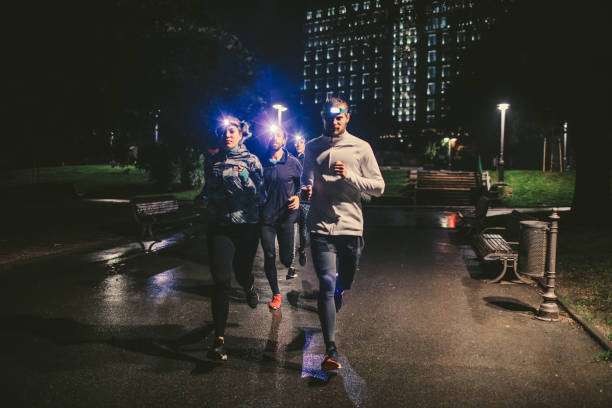
When the last glow of sunset sinks into the distant mountains and the city lights gradually blur behind you, the single beam of light atop your head becomes the medium through which you converse with the entire world.
Once upon a time, our requirements for a headlamp were as simple as “bright” or “not bright.” Today, this light fixed to your forehead has long surpassed the realm of mere illumination. It has quietly evolved, transforming from a passive tool into an “intelligent node” capable of understanding the environment, anticipating needs, and even integrating into your lifestyle. This is not just a victory for technology, but a silent upgrade in the way we explore the world.
From “Lighting Your Feet” to “Seeing the Big Picture”: The Multidimensional Evolution of Function
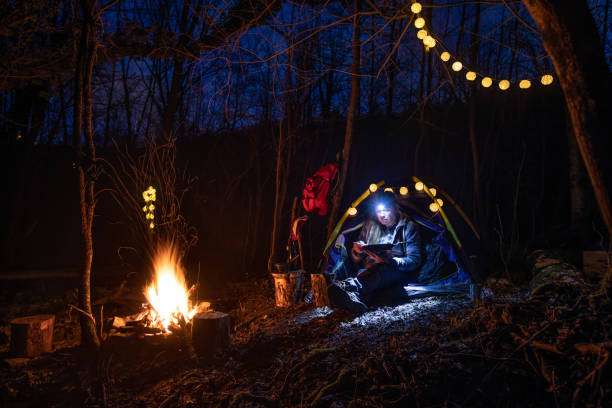
The mission of early headlamps was clear: to provide hands-free directional lighting in the dark. The revolution of modern headlamps, however, began with a deeper understanding of “light” itself. A single, harsh, cold white light no longer meets the demand.
You will find that professional headlamps have begun to feature dual-source or even multi-source systems:
- Cool White LED (~6500K): Responsible for spotlighting, penetrating rain and fog to scout the path far ahead.
- Warm White LED (~4000K): Provides floodlighting, spreading a soft, cozy blanket of light around the campsite, ensuring eyes do not tire easily during cooking or reading.
“The red light mode is never just a ‘backup’ feature; it is an essential pillar of outdoor safety and visual preservation.”
Even more ingenious is the popularization of the red light mode. Its longer wavelength effectively protects the human eye’s dark adaptation, allowing you to quickly regain observation of the dark environment after checking a map or briefly turning off the main light.
Seamless Integration with Modern Outdoors: A Symphony of Intelligence and Humanity
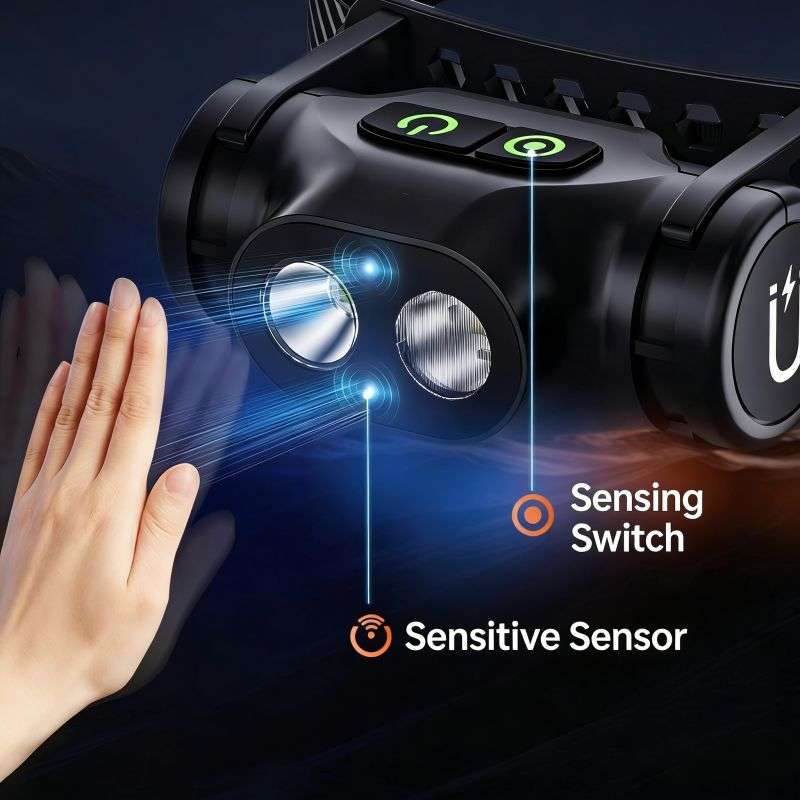
Modern outdoor life pursues fluency and immersion. To this end, the interaction methods of headlamps are undergoing a revolution. Imagine when your hands are covered in mud while fixing a tent, or you are wearing gloves in the freezing wind—traditional button operations become clumsy and difficult.
Headlamps integrated with gesture control or motion sensors allow the light to turn on or off with a simple wave in front of the sensor. This non-contact intelligent interaction raises convenience to a brand-new height.
For explorers who need to switch quickly between different scenarios, modular and multi-form designs have become highlights:
- Magnetic Quick-Release: Can be instantly removed from the headband.
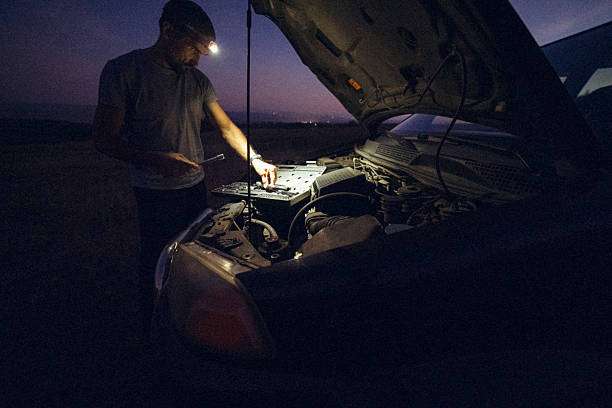
- Versatile Attachment: Adheres to metal surfaces like car hoods or tent poles.
- Multi-Purpose: Transforms into a reliable work light or camp lantern.
This “one lamp, multiple uses” flexibility greatly expands usage scenarios while reducing the weight burden of the backpack.
Discover versatile headlamp solutions designed for hands-free outdoor adventures, camping, and all-weather use.
Comfort, Long-Lasting Battery Life, and All-Weather Companionship
All intelligence and functionality must be built upon the foundation of effortless wear and enduring battery life. A well-designed headband often utilizes thickened foam, elastic mesh, or two-way rapid adjustment systems. The goal is singular: to make you almost forget its existence after hours of hiking or running.
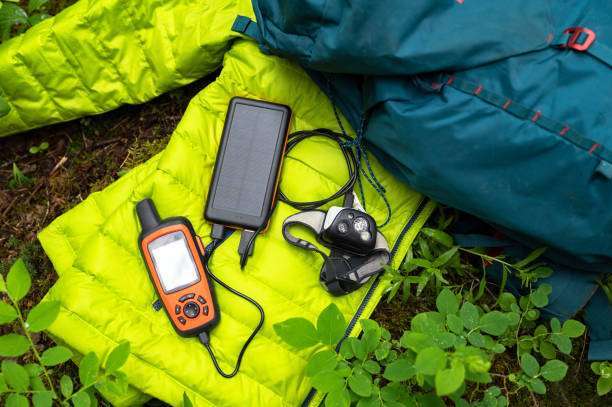
Battery endurance is the guarantee of confidence. Modern headlamps generally adopt rechargeable lithium batteries and provide ten hours or more of lighting support under medium brightness through efficient circuit management. Combined with universal USB-C fast charging, you can quickly “recover blood” while resting at camp, completely saying goodbye to power anxiety.
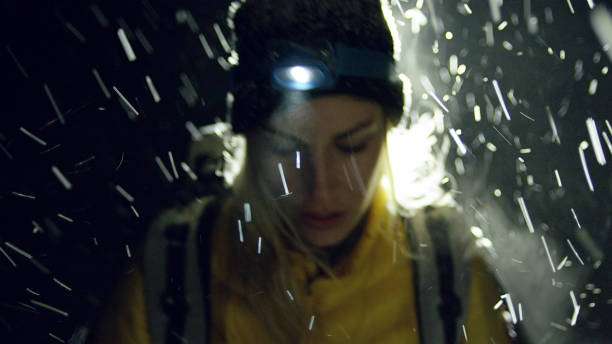
More importantly, this beam must be able to light up reliably in any environment. This points to the protective performance of the headlamp:
|
Feature |
Technical Requirement |
User Benefit |
|---|---|---|
|
Structure |
One-piece tight molding |
Resists heavy rain and splashes |
|
Sealing |
Precision sealing technology |
Prevents dust and fog intrusion |
|
Reliability |
High protection rating |
Functions in any weather condition |
Frequently Asked Questions (FAQ)
Q: Besides saving power, what are the practical uses of the red light on a headlamp?
A: Red light has three core uses: 1. Protecting Night Vision: It doesn’t cause pupils to contract sharply, letting you adapt to darkness faster. 2. As a Signal Light: Highly visible at night for camp positioning or emergency SOS. 3. Reducing Insect Interference: Most insects are less sensitive to red light compared to white light.
Q: Will headlamps with smart functions like gesture sensing trigger accidentally in complex environments?
A: Mature designs take this into account. Usually, gesture sensing requires specific distance and logic (like a quick wave) and can often be manually disabled. In dusty or densely vegetated areas, users can return to traditional physical button operations to ensure absolute reliability.
Conclusion
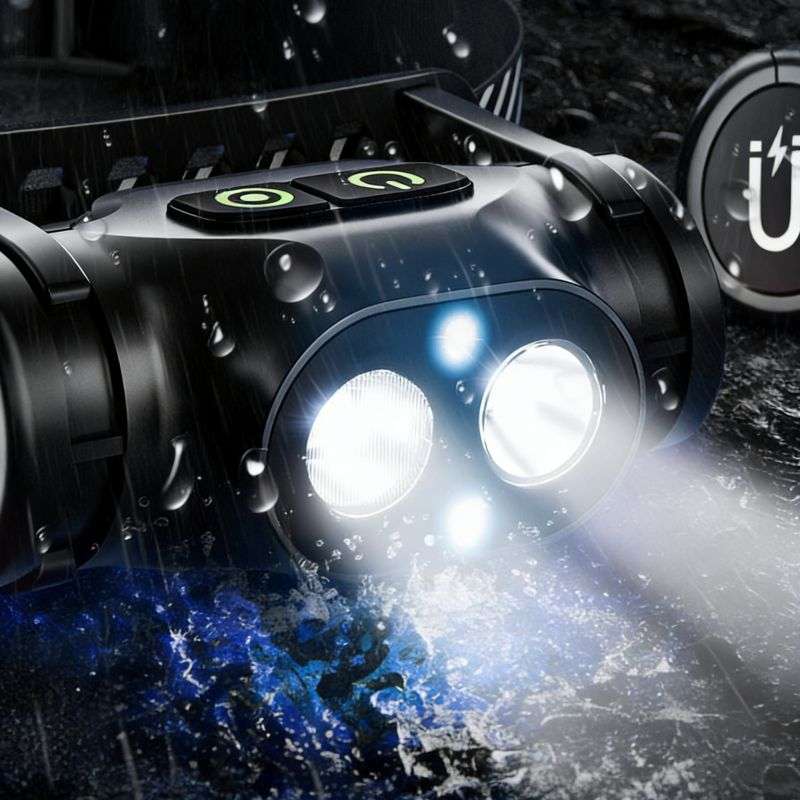
When you choose a modern headlamp, you are choosing more than just a light source. You are choosing a partner that knows how to converge light when you need to see far and radiate warmth when you need to camp; an intelligent assistant that understands your gestures when your hands are occupied; and a loyal ally that stands firmly on your forehead, through wind and rain, to illuminate and guard every leg of your journey.
“Technology and humanity intertwine, elevating the headlamp from a tool to an experience.”
It no longer just lights the path ahead but illuminates our calmer, closer, and more enjoyable connection with nature. Before your next departure, please re-examine that beam of light above your head—is it ready to become the “second brain” of your outdoor life?